Demineralization Plant and Distillation Plant: Meaning, Working, Uses, and Differences

Water purity plays a vital role in industries, laboratories, healthcare, and manufacturing processes. In many applications, normal treated or drinking water is not sufficient because it still contains dissolved salts, minerals, ions, and impurities that can damage equipment or affect product quality.

To achieve high‑purity water, two major technologies are widely used:

  1. Demineralization Plant (DM Plant)
  2. Distillation Plant

Although both systems aim to produce purified water, they work on completely different principles and are used for different purposes.

This blog explains in detail:

  • What is a Demineralization Plant
  • What is a Distillation Plant
  • How both systems work
  • What each system is used for
  • The difference between demineralization and distillation
  • Which product is suitable for which application

This detailed guide will help you choose the right water purification solution for industrial or laboratory use.

What is a Demineralization Plant (DM Plant)?

A Demineralization Plant, commonly known as a DM Plant, is a water treatment system designed to remove dissolved minerals, salts, and ions from water. The water produced after this treatment is called Demineralized Water (DM Water).

In raw water, several dissolved minerals are present, such as:

  • Calcium
  • Magnesium
  • Sodium
  • Potassium
  • Chlorides
  • Sulphates
  • Nitrates

These minerals increase water conductivity and cause problems like scaling, corrosion, and fouling in industrial equipment. A DM Plant removes these dissolved ions, making the water highly pure and suitable for technical and industrial applications.

How Does a Demineralization Plant Work?

A Demineralization Plant works on the principle of Ion Exchange Technology. In this process, undesirable ions present in water are exchanged with hydrogen (H⁺) and hydroxyl (OH⁻) ions, which later combine to form pure water (H₂O).

Step‑by‑Step Working of a DM Plant

1. Pretreatment Stage

Before entering the DM system, raw water usually passes through pretreatment units such as:

  • Pressure Sand Filter (PSF) to remove suspended particles
  • Activated Carbon Filter (ACF) to remove chlorine, color, and odor

Pretreatment protects the resin beds and improves system life.

2. Cation Exchange Process

In this stage, water flows through a Cation Exchange Resin Vessel.

  • Positive ions like calcium (Ca²⁺), magnesium (Mg²⁺), and sodium (Na⁺) are removed
  • These ions are replaced with hydrogen ions (H⁺)

3. Anion Exchange Process

Next, the water enters an Anion Exchange Resin Vessel.

  • Negative ions like chloride (Cl⁻), sulphate (SO₄²⁻), and nitrate (NO₃⁻) are removed
  • These ions are replaced with hydroxyl ions (OH⁻)

4. Formation of Demineralized Water

Hydrogen ions (H⁺) and hydroxyl ions (OH⁻) combine to form H₂O, resulting in demineralized water with very low conductivity.

5. Mixed Bed Polishing (Optional)

For applications requiring ultra‑high purity water, a Mixed Bed DM Unit is added as the final stage. It removes any remaining traces of ions.

Main Components of a Demineralization Plant

A standard industrial DM Plant includes:

  • Raw water pump
  • Pressure Sand Filter
  • Activated Carbon Filter
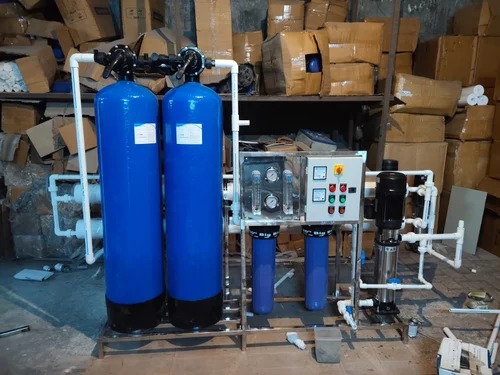
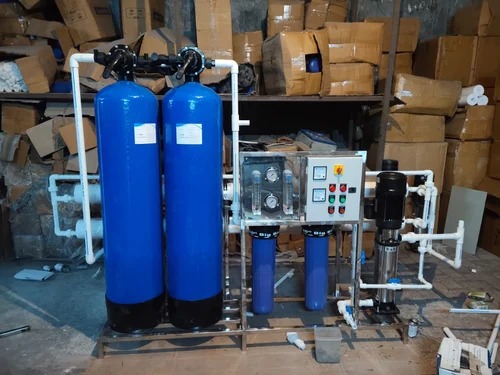
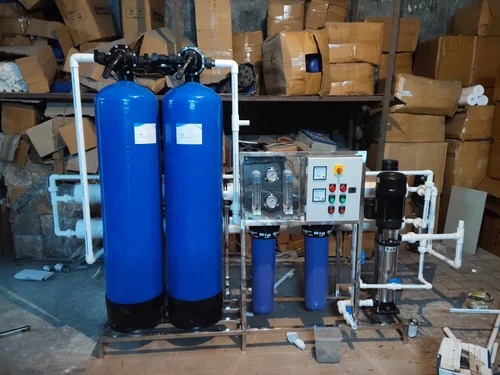
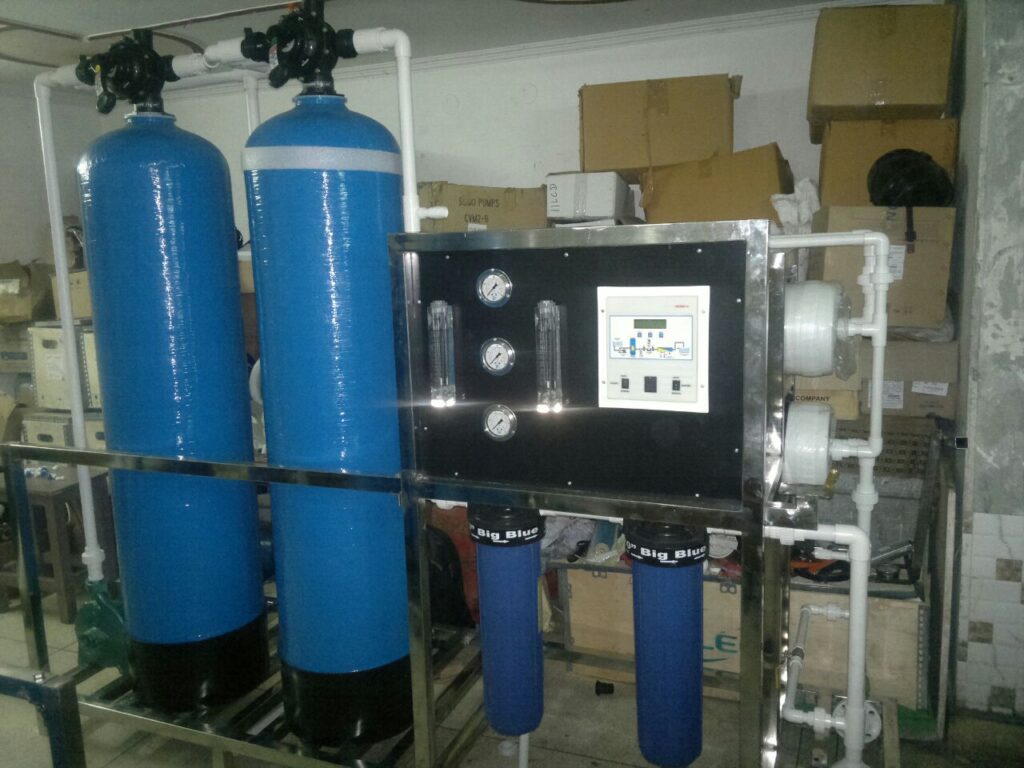
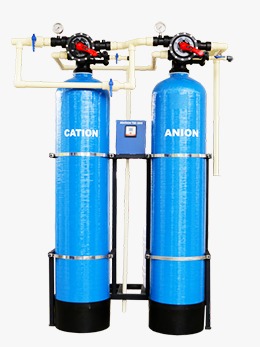
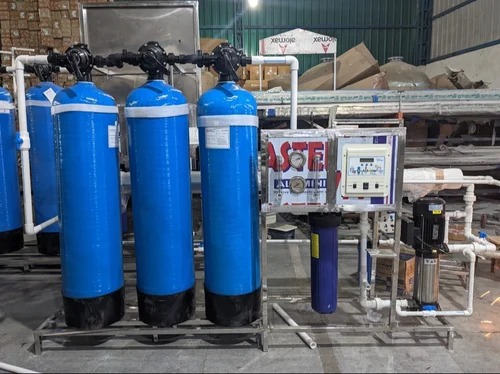
  • Cation exchange resin vessel
  • Anion exchange resin vessel
  • Mixed bed unit (optional)
  • Chemical dosing system
  • Control panel and piping

DM plants are available in various capacities such as 250 LPH, 500 LPH, 1000 LPH, 2000 LPH, and 10000 LPH, depending on application requirements.

Uses and Applications of Demineralization Plants

Demineralized water is widely used in industries where mineral‑free water is essential. Common applications include:

  • Boiler feed water in power plants and factories
  • Pharmaceutical manufacturing
  • Automotive and auto‑component industries
  • Battery manufacturing units
  • Chemical and process industries
  • Textile and dyeing industries
  • Electronics and semiconductor industries
  • Laboratories and research centers

A 2500 LPH Demineralization Plant is ideal for medium to large industries that require a continuous and reliable supply of DM water.

What is a Distillation Plant?

A Distillation Plant is a water purification system that works on the principle of heating, evaporation, and condensation. In this process, water is boiled to produce steam, which is then condensed back into liquid form. The condensed water is known as Distilled Water.

During boiling, dissolved salts, minerals, bacteria, and heavy impurities remain behind in the boiling chamber, while only pure water vapor is collected.

Distillation is one of the oldest and most reliable methods of producing very pure water, especially for laboratory and medical use.

How Does a Distillation Plant Work?

The working principle of a distillation plant is simple and based on physical separation:

  1. Raw water is fed into a heating chamber
  2. Water is heated until it reaches boiling point
  3. Water converts into steam, leaving impurities behind
  4. Steam passes through a condenser
  5. The condenser cools the steam and converts it back into liquid water
  6. The collected water is distilled water

Impurities and salts are periodically removed from the boiling chamber.

Main Components of a Distillation Plant

  • Feed water tank
  • Heating element or boiler
  • Evaporation chamber
  • Condenser
  • Distilled water collection tank
  • Control panel

Uses and Applications of Distillation Plants

Distillation plants are mainly used where very small quantities of ultra‑pure water are required. Typical applications include:

  • Laboratories and research institutions
  • Hospitals and medical equipment sterilization
  • Chemical testing laboratories
  • Small pharmaceutical research units
  • Educational institutes

Due to high power consumption and slow production rate, distillation plants are not suitable for large‑scale industrial use.

Difference Between Demineralization Plant and Distillation Plant

ParameterDemineralization PlantDistillation Plant
Working PrincipleIon exchangeEvaporation and condensation
Energy ConsumptionLowVery high
Output CapacityHigh (up to 2500 LPH and more)Low
Operating CostLowHigh
Speed of Water ProductionFastSlow
Industrial SuitabilityExcellentLimited
MaintenanceResin regenerationFrequent cleaning and descaling
ScalabilityEasyDifficul

Which System is Better and Where?

Choosing between a DM Plant and a Distillation Plant depends on application, capacity requirement, and operating cost.

Choose a Demineralization Plant if:

  • You need large volumes of purified water
  • Application is industrial or continuous process based
  • You want low operating and power cost
  • Required capacity is 250 LPH to 2500 LPH or more

Choose a Distillation Plant if:

  • Water requirement is very low
  • Application is laboratory or medical use
  • Highest level of purity is required in small quantity
  • Power consumption is not a major concern

Conclusion

Both Demineralization Plants and Distillation Plants play important roles in producing purified water, but their applications are very different. A distillation plant is best suited for laboratory‑scale or medical use where small quantities of highly pure water are needed.

For industrial applications requiring large volumes of mineral‑free water at low operating cost, a Demineralization Plant is the most efficient and practical solution. Especially for medium and large industries, a 2500 LPH DM Plant provides the perfect balance of capacity, efficiency, and cost‑effectiveness.

Selecting the right system based on usage, capacity, and operating conditions ensures better performance, longer equipment life, and reduced maintenance costs.
DM Plant – Complete Guide on Demineralization Plants, Applications, Benefits & Why Industries Need Them

Introduction

Water is the backbone of every industry. But raw water from natural sources contains salts, minerals, and impurities that are not suitable for sensitive applications like pharmaceuticals, power generation, or electronics manufacturing. For such needs, industries use a DM Plant (Demineralization Plant) to achieve high-purity, demineralized water.

This article explains everything you need to know about DM plants—how they work, whether RO is necessary before DM, key applications, benefits, and important points to check before requesting a quotation.

Keywords: DM Plant, Demineralization Plant, DM Plant vs RO, DM Plant Applications, DM Plant Benefits, RO + DM Plant, Industrial Water Treatment, Pure Water System


What is a DM Plant?

A DM Plant (Demineralization Plant) is a water treatment system that removes dissolved salts, minerals, and ions from raw water using ion exchange technology.

Raw water typically contains:

  • Calcium
  • Magnesium
  • Sodium
  • Chloride
  • Sulfate
  • Nitrate

These dissolved ions can damage equipment like boilers and turbines or affect product quality in industries such as pharmaceuticals and electronics. A DM plant eliminates these ions and provides ultra-pure water with TDS as low as 0–10 ppm.


How Does a DM Plant Work?

A DM Plant operates using ion exchange resins that replace unwanted salts with harmless ions.

  1. Cation Exchange Resin – Removes positive ions (Calcium, Magnesium, Sodium) and replaces them with Hydrogen ions (H⁺).
  2. Anion Exchange Resin – Removes negative ions (Chloride, Sulfate, Nitrate) and replaces them with Hydroxide ions (OH⁻).
  3. Result – Hydrogen (H⁺) and Hydroxide (OH⁻) combine to form pure water (H₂O).

This process reduces conductivity and produces deionized water suitable for high-end industrial use.


DM Plant vvs.s RO Plant – Do You Need RO Before DM?

This is one of the most common questions asked by industry owners.

  • Reverse Osmosis (RO Plant):
    • Works on membrane technology
    • Removes 95–98% of dissolved salts
    • Produces low TDS water but not completely demineralized
  • DM Plant (Demineralization Plant):
    • Works on ion exchange process
    • Removes nearly 100% of dissolved ions
    • Produces water with almost zero TDS

👉 Is RO necessary before DM?

  • If the raw water TDS is above 1000 ppm, RO should be installed first. It reduces load on the DM plant and increases resin life.
  • If the raw water TDS is below 500 ppm, DM can be used directly.
  • Many industries prefer RO + DM Plant combination for better efficiency, lower running cost, and extended life of resin.

Applications of DM Plant – Where is it used?

DM Plants are used across multiple industries where high-purity water is essential. Some key applications include:

  1. Pharmaceutical Industry – For drug formulations and sterile processes.
  2. Power Plants – As boiler feed water to prevent scaling and corrosion.
  3. Electronics & Semiconductor Industry – For chip manufacturing and circuit cleaning.
  4. Chemical Industry – For precise chemical reactions.
  5. Food & Beverage Industry – For soft drinks, packaged water, and food processing.
  6. Hospitals & Laboratories – For dialysis units and lab tests.
  7. Cosmetics Industry – For creams, lotions, and beauty products.
  8. Battery Manufacturing – For electrolyte water in lead-acid batteries.

👉 These applications show why a Demineralization Plant is critical for industries requiring pure water systems.


Benefits of DM Plant

A DM Plant offers several industrial and operational advantages:

  1. Ultra-Pure Water – Removes 99.9% of dissolved salts and ions.
  2. Protects Equipment – Prevents scaling and corrosion in boilers, turbines, and heat exchangers.
  3. Cost-Effective – Eliminates dependency on bottled pure water.
  4. Continuous Supply – Ensures uninterrupted availability of deionized water.
  5. Versatile – Available in different capacities (500 LPH, 1000 LPH, 2000 LPH, or custom).
  6. Environment-Friendly – Reduces plastic waste from packaged water.
  7. Improves Process Efficiency – Ensures better product quality and industrial performance.

Things to Check Before Buying a DM Plant (Quotation Guide)

When requesting a quotation for a DM Plant, always consider:

  • Required Capacity – (500 LPH, 1000 LPH, 2000 LPH, or more)
  • Raw Water TDS – If high, go for RO + DM combination
  • Resin Type – Strong acid cation resin and strong base anion resin are ideal
  • Regeneration Chemicals – Requires Hydrochloric Acid (HCl) and Sodium Hydroxide (NaOH)
  • Automatic vs Manual – Automatic DM plants are easier to operate
  • Material of Construction – FRP vessels for budget, SS 304/316 for industries
  • Warranty & AMC – Check annual maintenance contract terms

👉 Choosing the right DM Plant Manufacturer ensures durability, efficiency, and lower long-term costs.


Maintenance of DM Plant

To ensure long life and consistent performance:

  • Regular resin regeneration with acid/alkali is required
  • Backwashing and flushing should be done on schedule
  • Resin replacement cycle: 2–3 years depending on water quality
  • Annual Maintenance Contracts (AMC) are highly recommended

DM Plant vs Other Technologies

  • RO Plant – Removes 95–98% salts, but not 100%
  • UV & UF Systems – Kill bacteria but do not remove salts
  • Water Softener – Removes hardness only, not total dissolved solids

👉 For industries requiring zero TDS and deionized water, a DM Plant is the best choice.


FAQs on DM Plants

Q1: What is the TDS level of DM water?
A1: Typically between 0–10 ppm.

Q2: Do we always need RO before DM?
A2: Not always. It depends on raw water TDS.

Q3: What chemicals are used in DM regeneration?
A3: Hydrochloric Acid (HCl) and Sodium Hydroxide (NaOH).

Q4: What industries need DM water the most?
A4: Pharma, power plants, electronics, chemical, cosmetics, and battery manufacturing.

Q5: What is the lifespan of resins in DM Plants?
A5: 2–3 years with proper regeneration and maintenance.


Conclusion

A DM Plant (Demineralization Plant) is one of the most effective water treatment solutions for industries where ultra-pure water is essential. It ensures high-quality production, protects equipment, and reduces costs.

Whether you are in pharmaceuticals, power generation, electronics, food, or chemicals, investing in a DM plant is a long-term benefit. For high TDS water, RO + DM Plant is the ideal combination to ensure efficiency and durability.

If you are looking for a reliable DM Plant Manufacturer in Delhi NCR, Go On Sales Corporation provides customized solutions for all industrial water treatment needs.

Reverse Osmosis (RO) Plants – Complete Guide & Best Quotation in Delhi NCR

Introduction

Water is the foundation of life, but unfortunately, in today’s time, getting safe and pure water is not easy. In cities like Delhi NCR, water often contains high TDS (Total Dissolved Solids), harmful bacteria, heavy metals, and chemicals that can cause health problems.

This is where Reverse Osmosis (RO) plants come into the picture. RO technology ensures 100% safe, clean, and great-tasting water for homes, offices, schools, hospitals, and industries.

In this blog, we will explore everything about RO plants – how they work, why they are important, different types, applications, and why Go On Sales Corporation is one of the most trusted RO manufacturers in Delhi NCR.


🔬 What is Reverse Osmosis (RO)?

Reverse Osmosis (RO) is an advanced water purification process where water is passed through a semi-permeable membrane. This process removes:

  • ✔ Dissolved salts (TDS)
  • ✔ Heavy metals (lead, arsenic, mercury)
  • ✔ Harmful chemicals (chlorine, pesticides)
  • ✔ Bacteria & viruses

As a result, you get fresh, odor-free, and healthy water.

⚙️ Main Components of an RO Plant

  1. Pre-filters – Remove dust, dirt & large particles
  2. High-Pressure Pump – Pushes water into the RO membrane
  3. RO Membrane – Removes dissolved impurities
  4. Post Filters & UV/UF – Provide final polishing & disinfection
  5. Storage Tank/Water Cooler – Stores pure water for use

🌍 Why RO Plants are Necessary in India (Especially Delhi NCR)

In regions like Delhi NCR, groundwater and municipal supply often contain high TDS levels ranging from 500 to 2000 ppm. Such water is not safe for drinking and can cause:

  • Kidney stones & health issues
  • Bad taste & odor
  • Scaling in pipelines & machinery

RO Plants are essential because they:

  • Reduce TDS to safe levels (50–150 ppm)
  • Improve taste & quality of water
  • Provide continuous supply of pure water for homes, offices, schools, hospitals, and industries

🏭 Types of RO Plants

1️⃣ Domestic RO Systems

  • Ideal for homes & small offices
  • Capacity: 10–15 liters/hour
  • Removes bacteria, chemicals & makes water healthy

2️⃣ Commercial RO Plants

  • For restaurants, schools, hotels, hospitals, offices
  • Capacity: 100 LPH to 1000 LPH
  • Compact, efficient & low-maintenance

3️⃣ Industrial RO Plants

  • Designed for factories, industries & large institutions
  • Capacity: 1000 LPH to 25,000 LPH
  • Stainless steel body, heavy-duty pumps & long life
  • Examples: 1000 LPH SS RO, 1500 LPH RO, 2000 LPH RO, 2500 LPH RO

4️⃣ RO with Water Cooler

  • Perfect for schools, corporates, offices, and public places
  • Provides chilled & pure water
  • Available in 40L, 80L, 120L, 400L models

✅ Advantages of RO Plants

  • ✔ Removes 95–99% impurities
  • ✔ Safe for health – protects against water-borne diseases
  • ✔ Improves taste & odor of water
  • ✔ Cost-effective compared to bottled water
  • ✔ One-time investment with long-term savings
  • ✔ Eco-friendly – reduces plastic bottle usage

📌 Applications of RO Plants

  1. Homes & Apartments – Safe drinking water for families
  2. Schools & Colleges – Pure water for students & staff
  3. Hospitals – Infection-free water for patients
  4. Hotels & Restaurants – Better taste for cooking & beverages
  5. Factories & Industries – Continuous water supply for workers & processes
  6. Corporate Offices – Safe & chilled water for employees

💡 How to Choose the Right RO Plant?

When selecting an RO plant, consider:

  • Daily Water Requirement – How many liters you need per day
  • TDS Level – Raw water quality (check with TDS meter)
  • Usage Type – Domestic, commercial, or industrial
  • Space & Budget – Compact or large-scale models

👉 Example:

  • 50–100 people office → 250 LPH RO with water cooler
  • School with 500 students → 1000 LPH RO plant
  • Factory with 2000+ staff → 2000–5000 LPH industrial RO plant

🛠️ Maintenance & AMC (Annual Maintenance Contract)

For long-lasting performance, RO plants require regular maintenance.

  • Filters → Change every 1–2 months
  • Membrane → Life 8–12 months (depends on water quality)
  • Electrical parts → Covered in warranty
  • AMC Plans → Cover servicing & breakdown support

At Go On Sales Corporation, we provide AMC packages to ensure your RO plant runs smoothly without interruption.


🏢 Go On Sales Corporation – Trusted RO Manufacturer in Delhi NCR

Go On Sales Corporation (Faridabad) is a leading manufacturer & supplier of Commercial & Industrial RO Plants.

🔹 Our Products:

  • Commercial RO Systems (100–1000 LPH)
  • Industrial RO Plants (1000–25,000 LPH)
  • Stainless Steel RO Models (304 grade, heavy base)
  • Water Coolers with inbuilt RO
  • Filtration Systems & Softener Plants
  • AMC & Spare Parts Support

🔹 Why Choose Us?

  • Customized quotations as per site requirement
  • High-quality stainless steel models for durability
  • Quick installation & 1-year warranty on electrical parts
  • Experienced engineers & 24–48 hours emergency support
  • Transparent pricing – no hidden charges

💰 How to Request a Quotation?

Getting a quotation is simple:

  1. Share your daily water requirement (liters/day)
  2. Provide your raw water TDS level
  3. Let us know your space availability & budget

👉 Our team will prepare a best price quotation customized for you.

📞 Contact us at: 9821006585
📧 Email: go.on.sales20@gmail.com


🌟 Conclusion

A Reverse Osmosis (RO) Plant is not just a water purifier – it is an investment in health, safety, and long-term savings. Whether you need a domestic RO for home, a commercial RO for school/hotel, or an industrial RO plant for your factory, Go On Sales Corporation provides the best quotation and reliable service in Delhi NCR.

🚰 Choose purity. Choose health. Choose Go On Sales Corporation.

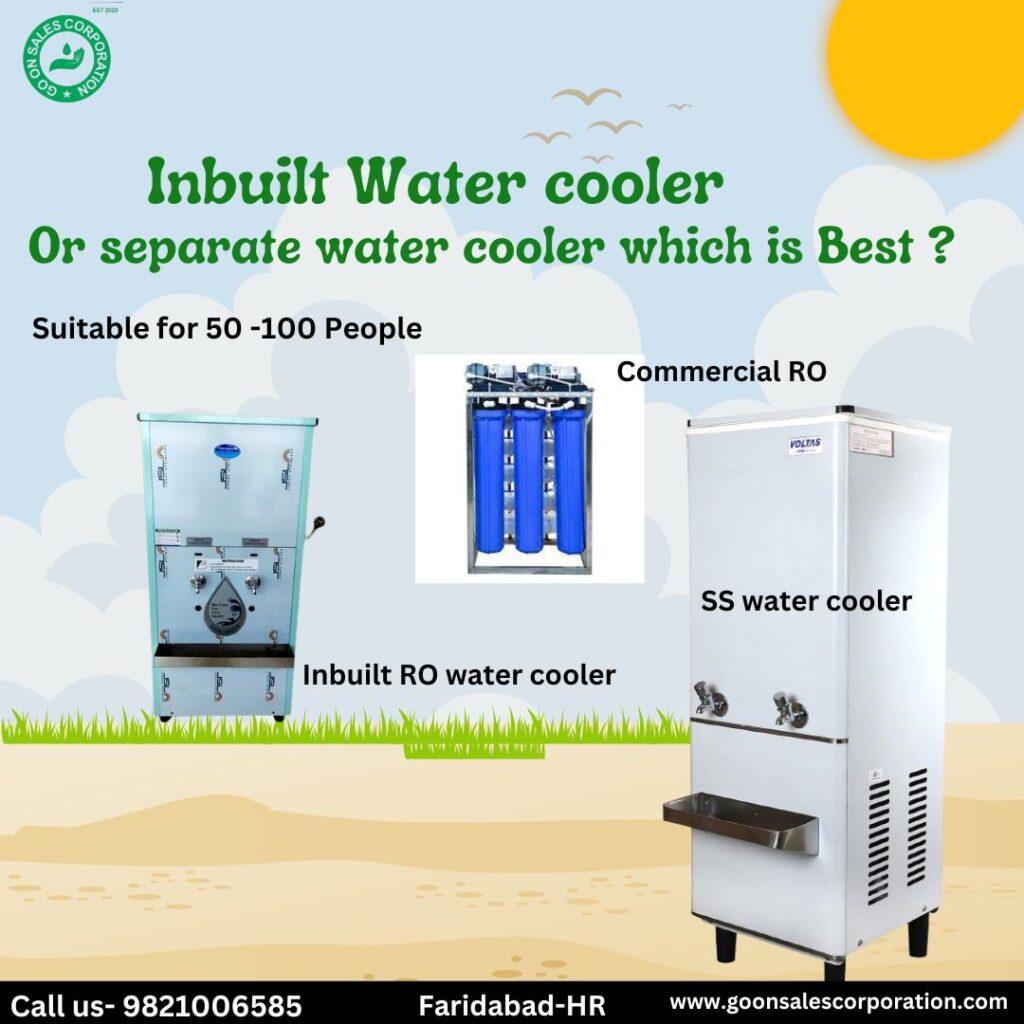
Inbuilt RO Water Cooler vs. Separate RO System with Water Cooler: Which is the Best Choice?

When selecting a water purification and cooling solution for offices, schools, industries, or public places, two main options are available: an inbuilt RO water cooler or a separate RO system with a water cooler. Understanding their differences in cost, specifications, and benefits can help you make the right choice.


1. Inbuilt RO Water Cooler

An inbuilt RO water cooler is a single unit that combines a Reverse Osmosis (RO) system with a water cooler. It is a compact, space-saving solution designed for places with limited installation space.

Specifications:

  • Filtration Capacity: Available in 40 LPH, 80 LPH, 120 LPH, or more
  • Cooling Capacity: 20L, 40L, 80L, 120L, 150L storage options
  • Stages of Purification: Typically 5-7 stages, including Sediment Filter, Carbon Filter, RO Membrane, UV Purification, and Post-Carbon Filter
  • Body Material: Stainless steel (SS-304), rust-resistant and durable
  • Power Consumption: Moderate, as both cooling and purification functions are integrated
  • Installation: Easy plug-and-play design, requiring minimal plumbing

Advantages of Inbuilt RO Water Cooler:

Space-Saving: Combines two units into one, ideal for compact areas ✅ Convenience: Directly dispenses RO-purified, chilled water ✅ Low Maintenance: Single unit means fewer maintenance requirements ✅ Aesthetic Appeal: Sleek and professional appearance, suitable for offices and institutions ✅ Energy Efficiency: Optimized for lower power consumption than two separate units

Disadvantages of Inbuilt RO Water Cooler:

Higher Initial Cost: More expensive upfront compared to standalone RO systems ❌ Limited Degradability: The RO system capacity cannot be upgraded separately ❌ Dependency on a Single System: If one component fails, the entire system might stop functioning


2. Separate RO System with Water Cooler

A separate RO system and water cooler means, having two independent units—one for water purification and another for cooling. This option provides more flexibility and is ideal for larger-scale operations.

Specifications:

  • RO System Capacity: Ranges from 25 LPH to 2000 LPH, depending on requirements
  • Cooling Capacity: Available in 20L, 40L, 80L, 120L, and 150L+ storage sizes
  • Stages of Purification: Generally includes 6-8 purification stages with additional pre-filters
  • Body Material: Stainless steel (SS-304) for the water cooler; RO systems are available in FRP, SS, or MS material
  • Power Consumption: Higher due to two separate units
  • Installation: Requires more space and setup effort, including plumbing connections between the RO system and cooler

Advantages of Separate RO System with Water Cooler:

Customizable & Scalable: RO system capacity can be upgraded independently ✅ Better Performance for Large-Scale Use: Ideal for factories, hospitals, and public places with high water demand ✅ Longer Lifespan: Independent units reduce the risk of total system failure ✅ Cost-Effective for High Usage: More economical over time due to separate maintenance options ✅ Redundancy: If the RO system or water cooler fails, the other can still function independently

Disadvantages of Separate RO System with Water Cooler:

Requires More Space: Needs additional installation area for both units ❌ Higher Maintenance Costs: Two separate units mean servicing costs might be higher ❌ More Initial Setup Work: Requires proper plumbing and electrical connections between the RO unit and cooler


3. Cost Comparison

FeatureInbuilt RO Water CoolerSeparate RO & Water Cooler
Initial CostHigher (₹50,000 – ₹1,50,000)Moderate to High (₹40,000 – ₹2,00,000)
Maintenance CostLower (Single unit servicing)Higher (Two units to maintain)
LifespanModerateLonger
FlexibilityFixed system, less degradabilityFlexible and upgradable
Space RequirementLess spaceRequires more space
SuitabilityOffices, Schools, Small IndustriesFactories, Large Offices, Public Places

4. Which One Should You Choose?

Choosing between an inbuilt RO water cooler and a separate RO system with a water cooler depends on specific needs, budget, and available space.

Best for Small-Scale Use:

If you need a compact, easy-to-maintain, and energy-efficient solution for a school, office, or small business, an inbuilt RO water cooler is the best choice. It offers hassle-free installation, looks modern, and requires less maintenance.

Best for Large-Scale Use:

For factories, hospitals, large offices, and industrial setups with high water demand, a separate RO system with a water cooler is recommended. This option allows flexibility in choosing the right RO capacity, independent maintenance, and better long-term cost efficiency.


Conclusion

Both inbuilt RO water coolers and separate RO systems with water coolers have their advantages and limitations. The decision depends on space, budget, water demand, and maintenance considerations.

Go On Sales Corporation provides a wide range of both inbuilt RO water coolers and separate RO systems with water coolers, ensuring you get the right solution for your needs. Contact us for expert advice and customized solutions!

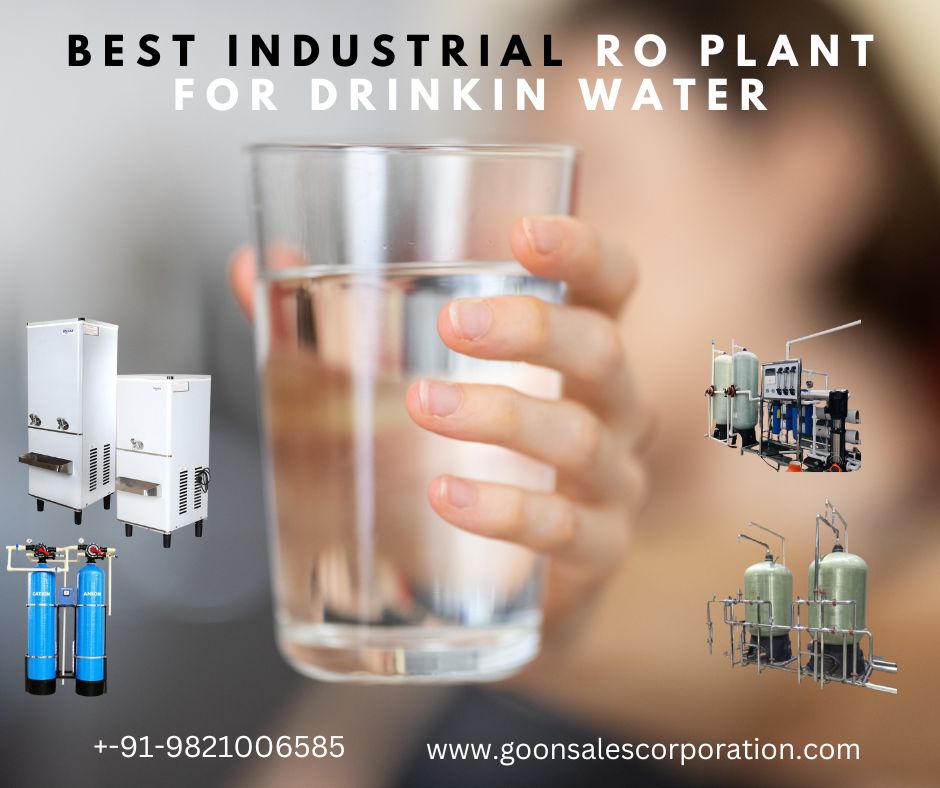
Best Industrial RO Plant for Drinking Water

At Go On Sales Corporation, we offer all types of commercial and industrial RO plants designed to deliver the Best Industrial RO Plant for Drinking Water. Our RO systems ensure superior water quality, purification, and performance.

How We Can Help:

We understand the importance of reliable water purification systems, particularly for industries where water quality is essential for employee health, manufacturing processes, and product quality. Our industrial RO plants handle high TDS levels and purify water to the highest standards for drinking and industrial use.

Why Choose Go On Sales Corporation? For Best Industrial RO Plant for Drinking Water.

  • Comprehensive Range of RO Plants: We provide solutions for all types of commercial and industrial needs, from small businesses to large-scale operations. Whether you require a 1000 LPH or a larger capacity system, we have the right product for you.
  • Innovative Technology: Our plants use cutting-edge technology to remove up to 98% TDS. They deliver high efficiency, ensure consistent performance, and reduce maintenance costs.
  • Automatic Operation: Our systems come with auto-operation features for easy handling. Once installed, they work seamlessly with minimal supervision, saving time and energy.
  • Custom Solutions: We offer customized RO systems to meet the specific needs of your industry. Whether you need drinking water for employees, clean water for machinery cooling, or purified water for production, we tailor solutions for optimal results.

Product Features & Details:

  • High TDS Removal: Our RO plants remove up to 98% TDS, ensuring clean and purified water for all industrial and commercial uses.
  • Durability and Reliability: Built with high-grade materials, our systems are robust and designed to handle challenging industrial environments. They ensure long-term performance, reducing the risk of downtime.
  • Space-Saving Design: Compact and easy to install. Our systems fit into various spaces, making them ideal for factories, offices, and industrial plants.
  • Automatic & Easy Maintenance: With an automatic operating system. Our RO plants are easy to manage, reducing the need for constant monitoring. Regular servicing and maintenance ensure they continue to run efficiently.

Our Services:

At Go On Sales Corporation, we don’t just sell products – we provide complete solutions. Our team is dedicated to providing end-to-end services, including:

  • Installation: Professional and hassle-free installation of RO systems, customized to your space and needs.
  • After-Sales Support: Our commitment to customer satisfaction extends beyond the sale. We offer regular maintenance and emergency repairs, ensuring your system continues to work at peak performance.
  • Consultation & Customization: We offer consultations to understand your water treatment requirements and customize our RO systems to meet your exact needs, ensuring optimal water quality.
  • Ongoing Service: With quarterly servicing and availability of all spare parts, we ensure your RO system operates at its best throughout its lifespan.

Choose Go On Sales Corporation for Your Water Treatment Needs!

Ourindustrial RO plants are trusted by industries for their reliability, performance, and cost-effectiveness. Let us help you achieve pure, high-quality water with minimal hassle and maximum efficiency.

For more information or to get a quote, feel free to contact us today!

Best Industrial RO Plant for Pharmaceutical for Industries

In the pharmaceutical industry, maintaining water purity is crucial for ensuring product quality and compliance with regulatory standards. Industrial RO (Reverse Osmosis) plants play a vital role in providing high-purity water essential for manufacturing, cleaning processes, and laboratory use. Go On Sales Corporation offers robust and efficient RO plants specifically designed to meet the demanding requirements of the pharmaceutical sector.

Key Features of Best Industrial RO Plant for Pharmaceutical for Industries

  1. High Purity Water Output: Designed to deliver purified water with minimal Total Dissolved Solids (TDS), ensuring the highest quality for pharmaceutical production.
  2. Advanced Membrane Technology: Uses high-performance membranes capable of filtering out contaminants, bacteria, and viruses.
  3. 304-Grade Stainless Steel Body: Ensures durability, corrosion resistance, and compliance with hygiene standards.
  4. Automatic Control System: Equipped with smart controls for automated operation and real-time monitoring.
  5. Energy Efficiency: Optimized design to reduce power consumption, minimizing operational costs.
  6. Customizable Design: Tailored configurations to meet specific pharmaceutical industry standards.
  7. Compact Design: Space-saving structure ideal for pharmaceutical facilities.
  8. Effective Chemical Dosing System: Ensures optimal pH levels and controls microbial growth.

Technical Specifications of Go On Sales Corporation’s best Industrial RO Plant for Pharmaceuticals

  • Capacity Range: 250 LPH to 25,000 LPH
  • Material: Stainless Steel (SS 304 grade)
  • TDS Removal Efficiency: Up to 99%
  • Recovery Rate: 50-70% (depending on feed water quality)
  • Power Consumption: Energy-efficient design to minimize running costs
  • Operating Pressure: 10-16 Bar
  • Membrane Type: High-Performance Thin Film Composite (TFC) Membranes
  • Pre-Filtration System: Sand filter, carbon filter, and micron filter for optimal water clarity
  • Post-Treatment System: UV sterilizer or ozone generator for enhanced safety

Why Choose Go On Sales Corporation?

  • Expertise in Industrial RO Systems: With extensive experience in designing and manufacturing RO plants, Go On Sales Corporation offers reliable solutions for pharmaceutical water purification needs.
  • Custom Solutions: Systems are tailored to meet industry-specific requirements, ensuring optimal performance.
  • Comprehensive Support: Offering installation, maintenance, and after-sales service with prompt assistance.
  • Cost-Effective Solutions: Competitive pricing without compromising on quality.

Applications in the Pharmaceutical Industry

  1. Purified Water for Drug Formulation
  2. Cleaning and Sterilization of Equipment
  3. Water for Injection (WFI) Systems
  4. Quality Control Laboratories
  5. Cooling Tower and Boiler Feed Water

Contact Go On Sales Corporation Today

For pharmaceutical companies looking to enhance their water purification systems, Go On Sales Corporation offers trusted solutions designed for efficiency and performance. Reach out today to discuss your requirements and get a tailored solution for your industry.

Contact Details:

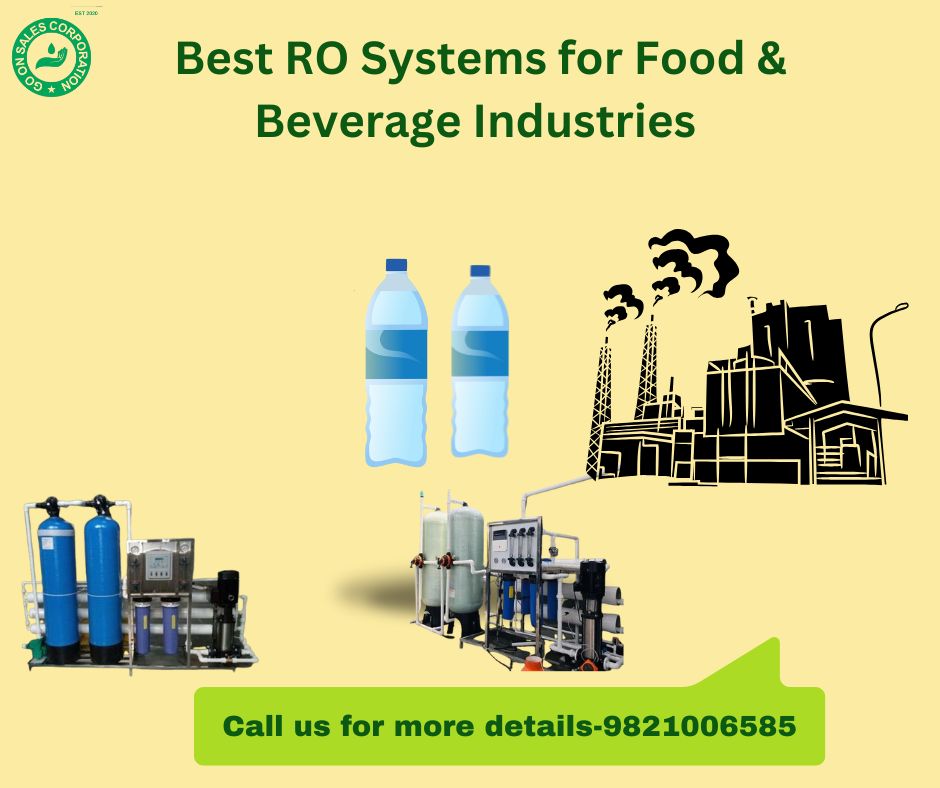
Best RO Systems for the Food and Beverage Industries

Introduction

Water is a critical component in thefood and beverage industry, used for production, processing, and cleaning. Ensuring water purity is essential for maintaining product quality, complying with regulatory standards, and enhancing overall operational efficiency. Reverse Osmosis (RO) systems play a crucial role in providing clean and safe water for food and beverage processing. This blog explores the best RO systems for the food and beverage industries and howGo On Sales Corporation provides top-tier water treatment solutions.

Why RO Systems Are Essential in the Food & Beverage Industry

The food and beverage industry requires high-purity water free from contaminants, chemicals, and microbial impurities. RO systems help remove dissolved salts, bacteria, and organic compounds, ensuring water meets industry standards. Key benefits include:

  1. Consistent Water Quality: Eliminates impurities, ensuring the same taste, texture, and safety in food and beverages.
  2. Regulatory Compliance: Meets stringent food safety and hygiene standards.
  3. Cost Savings: Reduces dependency on bottled or externally supplied water.
  4. Equipment Protection: Prevents scaling and corrosion in boilers, steamers, and other processing equipment.
  5. Environmental Sustainability: Reduces wastewater and energy consumption compared to traditional water treatment methods.

Key Features to Look for in an Industrial RO System

When choosing an RO system for the food and beverage industry, consider the following features:

  • High TDS Removal Capacity: Must effectively remove total dissolved solids (TDS) to improve water purity.
  • Advanced Filtration Stages: A multi-stage purification system ensures better contaminant removal.
  • Stainless Steel Construction: Prevents contamination and ensures durability in food-grade applications.
  • High Flow Rate & Capacity: Must support high water demand without interruptions.
  • Energy Efficiency: Lower power consumption and reduced operational costs.
  • Automation & Monitoring: Smart controls for real-time water quality monitoring and system efficiency.

Best RO Systems for the Food and Beverage Industries

1. 1000 LPH Stainless Steel RO Plant

  • Capacity: 1000 liters per hour
  • Material: 304-grade stainless steel
  • Best for: Medium-scale food processing plants, dairy industries, and beverage companies.
  • Benefits: Compact design, high-efficiency filtration, and corrosion resistance.

2. 2000 LPH Industrial RO Plant

  • Capacity: 2000 liters per hour
  • Technology: Multi-stage filtration with high TDS removal
  • Best for: Large-scale beverage production, soft drink manufacturing, breweries, and packaged water plants.
  • Benefits: Ensures high-purity water with low maintenance requirements.

3. 5000 LPH Industrial RO System

  • Capacity: 5000 liters per hour
  • Material: SS 304 and FRP (Fiber Reinforced Plastic) combination
  • Best for: High-volume food processing units, commercial kitchens, and dairy production.
  • Benefits: High flow rate, minimal downtime, and superior membrane performance.

4. 10000 LPH RO Plant for Beverage Industry

  • Capacity: 10000 liters per hour
  • Advanced Features: Automatic flushing, UV sterilization, and pH balancing system.
  • Best for: Bottled water plants, large-scale beverage manufacturers, breweries, and juice industries.
  • Benefits: Large-scale water purification with low operational costs.

5. Custom RO Systems for Specialized Needs

We offers custom-designed RO plants based on specific industry needs, ensuring:

  • Optimized flow rates
  • Required mineral composition
  • Integration with existing processing units
  • Reduced water wastage

Go On Sales Corporation’s Water Treatment Solutions for Best RO Systems for Food & Beverage Industries

Go On Sales Corporation specializes in manufacturing and supplying advanced RO water treatment plants tailored for the food and beverage sector. Our solutions include:

1. High-Capacity RO Plants

  • From 1000 LPH to 25000 LPH capacity, meeting the demands of small to large-scale industries.
  • Ensures compliance with FSSAI, BIS, and WHO standards.

2. Stainless Steel Water Treatment Systems

  • 304 & 316-grade stainless steel construction for food-grade applications.
  • Ensures corrosion resistance and longevity.

3. Advanced Filtration & Pre-Treatment

  • Multi-stage filtration, including sand filters, activated carbon filters, and UV sterilization.
  • Prevents microbial contamination and ensures safe processing water.

4. Energy-Efficient RO Systems

  • Low power consumption and high recovery rate designs.
  • Smart automation to reduce operational costs.

5. Customizable Water Treatment Solutions

  • Tailor-made solutions based on TDS levels, mineral retention needs, and production requirements.
  • Specialized designs for soft drink production, dairy processing, brewery water treatment, and packaged water plants.

6. Annual Maintenance Contracts (AMC) & After-Sales Support

  • Comprehensive maintenance plans covering membrane cleaning, filter replacements, and system troubleshooting.
  • 24/7 technical support for uninterrupted water supply.

Why Choose Go On Sales Corporation?

  1. Industry Expertise: Years of experience in designing food-grade water purification solutions.
  2. Quality Assurance: Compliance with ISO 9001:2015 and industry regulatory standards.
  3. Cost-Effective Solutions: Competitive pricing with high-performance equipment.
  4. Customization Options: Tailored solutions for different production needs.
  5. Nationwide Service Network: Quick response for maintenance and troubleshooting.

Conclusion

Choosing the right RO system is essential for maintaining the quality, safety, and efficiency of food and beverage production. Go On Sales Corporation provides high-performance industrial RO systems designed to meet the stringent water quality needs of the industry. With customized solutions, high-grade materials, and expert after-sales support, we ensure that your business gets the best water treatment solutions.

For more details, consultation, or to get a customized RO system for your food or beverage business, contact Go On Sales Corporation today! Email us-go.onsales20@gmail.com

Commercial RO Plant Manufacturer in Faridabad

According to a pollution report, the drinking water quality and accessibility score in Faridabad is only 28.53 out of 100, which is quite low and unsafe for both human consumption and industrial use. This highlights the crucial role of Go On Sales Corporation, a leading Commercial RO Plant Manufacturer in Faridabad, Haryana. Only high-quality and well-manufactured water treatment systems can provide clean and safe drinking water.

Why is Water Treatment Important?

Water is one of our most essential resources, and access to clean water is a basic necessity. However, water quality is rapidly deteriorating, which affects public health and increases the cost of water supply. Common tap water often contains chlorine, lead, pesticides, fluoride, mercury, and harmful bacteria that can cause serious diseases like cholera, typhoid, dysentery, polio, and diarrhea.

To address this issue, advanced water filtration technologies, such as Reverse Osmosis (RO) systems, have become essential.

Looking for a Commercial RO Plant in Faridabad?

Go On Sales Corporation helps improve water quality by manufacturing high-performance commercial and industrial RO plants. We design water treatment solutions to meet various needs, ensuring safe and purified water for businesses and industries.

How Does a Commercial RO Plant Work?

A Reverse Osmosis (RO) plant operates through a multi-stage purification process:

  1. Pressure Filtration: Water is passed through membranes under high pressure to remove contaminants.
  2. Membrane Technology: Dissolved salts, bacteria, and impurities are blocked, while pure water passes through.
  3. Water Purification: Harmful substances are filtered out, improving taste and clarity.
  4. Final Filtration: The process reduces water conductivity and delivers high-purity water.

Applications & Benefits of Commercial RO Plants

The primary function of an RO plant is to desalinate or remove salt from water. This makes it suitable for various applications, including drinking water supply, industrial use, and irrigation. Our custom-built RO systems efficiently remove 95-99% of impurities, providing clean water with minimal maintenance.

Why Do Businesses in Faridabad Need RO Plants?

Water quality in India, including Faridabad, is often unfit for direct use in commercial setups. Industrial units, restaurants, schools, and hospitals require proper water treatment before usage.

At Go On Sales Corporation, we understand your needs. Our team provides expert guidance, installation services, and customized RO systems designed for your specific requirements. We use high-efficiency membranes and durable designs for long-lasting performance.

Advantages of Choosing Go On Sales Corporation’s RO Plants

  1. Cost-Effective – Reduces operational costs over time.
  2. Energy Efficient – Consumes less power while providing optimal performance.
  3. High Performance – Removes contaminants and improves water taste.
  4. Prevents Scaling – Enhances membrane life and reduces maintenance needs.
  5. Delivers Pure Water – Provides fresh, clear, and great-tasting water.

Reliable Maintenance & Support

Once installed, our RO systems require minimal maintenance. However, we offer ongoing servicing and remote monitoring to ensure consistent performance. Our team is always ready to assist with troubleshooting and maintenance.

Get the Best RO Plant for Your Business!

If you need a Commercial RO Plant Manufacturer in Faridabad, Go On Sales Corporation is your trusted partner. We design custom RO plants based on your specific needs and ensure quick installation and reliable service.

📞 For inquiries and purchases, call us at: +91-9821006585
📧 Email us at: go.on.sales20@gmail.com

Best RO Water Purifiers for Home & Office in 2025

Top RO Water Purifier Manufacturers in 2025

When it comes to choosing the best RO water purifiers, it’s important to consider the leading manufacturers in the industry. These brands have built a reputation for reliability, advanced filtration technology, and efficient after-sales service. Below are the top manufacturers offering high-quality RO water purification systems for both home and office use.

1. Go On Sales Corporation – Leading the RO Market

Go On Sales Corporation has emerged as a trusted manufacturer of high-quality RO systems, specializing in both commercial and industrial purification solutions. Their extensive range of RO plants ensures efficiency, durability, and top-tier after-sales service. Unlike other brands, Go On Sales Corporation provides fully customized solutions based on water quality requirements, making them a preferred choice for homes, offices, and industries.

Key Advantages of Go On Sales Corporation RO Systems:

  • High-capacity purification with industrial-grade filtration.
  • Customizable RO plants ranging from25 LPH to 25,000 LPH.
  • Quick and reliable service with emergency engineer visits.
  • Affordable maintenance plans, ensuring long-term efficiency.
  • Stainless steel RO systems for superior durability.

2. Kent RO Purifiers

Kent is one of the most well-known names in water purification, offering a range of domestic and commercial RO systems. Known for its advanced RO+UV+UF purification technology, Kent ensures that water is free from contaminants while retaining essential minerals.

Key Advantages of Kent RO Systems:

  • Multi-stage purification with mineral retention.
  • Alkaline RO technology to maintain pH balance.
  • Smart features like auto-flush and TDS control.
  • Wide range of home and industrial models.

3. Eureka Forbes (Aquaguard) – Trusted for Purity

Eureka Forbes, under its Aquaguard brand, offers some of the most advanced water purifiers with RO+UV+UF+MTDS technologies. With a focus on mineral retention and active copper technology, their purifiers deliver safe and healthy drinking water.

Key Advantages of Eureka Forbes RO Systems:

  • UV e-boiling technology for additional safety.
  • Active Copper and Zinc Booster for added minerals.
  • Smart LED indicators for purification status.
  • Suitable for both residential and commercial applications.

4. Blue Star – Commercial RO Excellence

Blue Star specializes in industrial and commercial-grade RO systems, including models with built-in water cooling capabilities. Their purifiers are ideal for offices, institutions, and factories requiring large volumes of purified water.

Key Advantages of Blue Star RO Systems:

  • Heavy-duty stainless steel construction.
  • High-capacity purification for industrial use.
  • Built-in cooling systems for temperature-controlled water.
  • Energy-efficient compressors for cost savings.

5. AO Smith – Smart & Innovative Purification

AO Smith is known for its advanced water purification technology, featuring hot and cold RO water dispensers. Their products are designed for premium home and office use, with an emphasis on efficiency and water recovery.

Key Advantages of AO Smith RO Systems:

  • Dual hot and cold water dispensing.
  • Advanced Recovery Technology to save water.
  • Digital monitoring with filter change alerts.
  • Stylish, space-saving designs for modern homes and offices.

Why choose an RO Water Purifier?

RO water purifiers use a multi-stage filtration process to remove impurities, heavy metals, bacteria, and viruses, ensuring safe drinking water. Key benefits of an RO system include:

  • Removal of dissolved impurities like arsenic, fluoride, and lead.
  • Improved taste and odor of water.
  • Advanced purification with UV, UF, and TDS controllers.
  • Cost-effectiveness compared to bottled water.
  • Smart monitoring and energy-efficient designs.

Top 5 RO Water Purifiers for Home Use in 2025

1. Kent Supreme Alkaline RO+UV+UF+TDS Control

Key Features:

  • Multiple purification stages with Alkaline Technology.
  • Removes bacteria, viruses, and dissolved impurities.
  • Alkaline water enhances pH levels and improves taste.
  • High storage capacity of 8 liters.
  • Smart auto-flushing system to prevent membrane scaling.

Why Choose? Ideal for households requiring pure and mineral-rich drinking water with a high TDS level.

2. Aquaguard Aura RO+UV e-Boiling with Active Copper

Key Features:

  • UV e-Boiling ensures water is as safe as boiling for 20 minutes.
  • Active Copper technology adds essential minerals.
  • Smart LED indicator for purification and tank full status.
  • Wall-mountable and compact design for modern kitchens.

Why Choose? Perfect for families looking for advanced purification with mineral retention and compact design.

3. Pureit RO

Key Features:

  • Copper Enrichment Technology infuses copper ions into the water.
  • Smart dual water dispensing: Copper RO water and normal RO water.
  • 7-stage purification process.
  • Saves up to 80% water compared to conventional RO systems.

Why Choose? Best for those who want the benefits of copper-enriched water along with water conservation.


Top 5 RO Water Purifiers for Office Use in 2025

1. Aquaguard Pure Chill 80 L RO+UV Water Purifier

Key Features:

  • High-capacity purification for office and commercial use.
  • RO+UV purification ensures 100% safe water.
  • Stainless steel body for durability.
  • Energy-efficient design.

Why Choose? Perfect for offices with high water consumption, offering durability and advanced filtration.

2. Blue Star 120L Inbuilt RO with Water Cooler

Key Features:

  • 120L storage with a cooling system.
  • RO filtration with UV purification.
  • Ideal for large offices and industrial use.
  • Heavy-duty stainless steel construction.

Why Choose? Ideal for workplaces requiring both purified and chilled water for employees and visitors.

3. Voltas 80L RO+UV Water Cooler

Key Features:

  • High-volume water purification and cooling.
  • RO+UV filtration ensures safety.
  • Robust design for commercial environments.
  • Energy-efficient compressor cooling.

Why Choose? A reliable option for factories, schools, and corporate offices needing pure and cool drinking water.


Conclusion

While brands like Kent, Blue Star, and Eureka Forbes offer high-quality RO systems, Go On Sales Corporation stands out due to its customized solutions, cost-effective pricing, and excellent customer support. Whether you require an RO system for home or office, Go On Sales Corporation ensures reliability and long-term performance.

For expert recommendations and installations, contact Go On Sales Corporation today!

Stay hydrated, stay healthy!

1500 LPH RO Plant Perfect Industrial Water Purification Solution

Introduction:-

Water purification is essential for industries, and a 1500 LPH RO Plant is a reliable solution for ensuring clean, safe, and high-quality water. Whether for manufacturing, food processing, hospitals, schools, or hotels, an industrial RO plant plays a crucial role in removing impurities and maintaining water standards. In this blog we will discuss on 1500 LPH RO Plant Perfect Industrial Water Purification Solution.

Why Choose a 1500 LPH RO Plant?

A 1500 LPH (Liters Per Hour) Reverse Osmosis Plant is designed to purify water efficiently, making it ideal for medium to large-scale industries. It removes dissolved impurities, chemicals, and bacteria, ensuring safe and pure water for various applications.

Key Features of the 1500 LPH RO Plant

Capacity: 1500 Liters Per Hour, suitable for industrial applications.
Material Options: Available in Stainless Steel (SS) or FRP (Fiber Reinforced Plastic) for durability and corrosion resistance.
Filtration Stages: Multi-stage purification, including pre-filtration, activated carbon filtration, RO membrane filtration, and post-filtration.
TDS Reduction: Effectively removes Total Dissolved Solids (TDS), ensuring purified water with reduced hardness and contaminants.
Energy-Efficient: Designed for low power consumption while providing high output.
Automation: Available in semi-automatic and fully automatic models for hassle-free operation.
Long-Lasting Performance: High-quality membranes and filters for extended service life with minimal maintenance.

Applications of the 1500 LPH RO Plant

The 1500 LPH RO system is ideal for various industries, including:

  • Manufacturing Units – Ensuring purified water for production processes.
  • Food & Beverage Industry – Maintaining hygiene and quality standards.
  • Hotels & Restaurants – Providing clean and safe drinking water.
  • Hospitals & Laboratories – Ensuring contamination-free water.
  • Educational Institutions – Meeting the daily water needs of students and staff.
  • Commercial Complexes – Reliable water purification for various commercial uses.

Pricing and Customization

The price of a 1500 LPH RO Plant Perfect Industrial Water Purification Solution depends on the specifications, material type (SS/FRP), level of automation, and additional customizations required. At Go On Sales Corporation, we provide customized solutions based on water quality and customer needs.

💰 For an exact price quote and further details, contact us:
📞 Call: 9821006585
📩 Email: go.on.sales20@gmail.com

Why Choose Go On Sales Corporation?

Expertise in RO Water Treatment Solutions
High-Quality Components and Reliable Performance
Customization Options to Suit Specific Industrial Needs
After-Sales Support & AMC Services Available

For industries looking for an efficient and cost-effective 1500 LPH RO Plant, Go On Sales Corporation provides the best solutions to ensure high-quality water purification. Contact us today to get the 1500 LPH RO Plant Perfect Industrial Water Purification Solution right system for your requirements!

Best Water Purifier for High TDS Water

Introduction

Water quality plays a crucial role in health and industrial applications. High TDS (Total Dissolved Solids) water contains excessive salts, heavy metals, and impurities that require advanced purification. Go On Sales Corporation provides top-quality 10,000 TDS RO plants and a full range of commercial and industrial RO systems designed for high TDS levels. These systems ensure pure, safe water for all industrial and commercial uses.

This guide explainsthe best water purifiers for high TDS, their working mechanisms, benefits, and key factors to consider when choosing an RO system.

What is TDS in Water?

TDS (Total Dissolved Solids) represents the concentration of dissolved salts, minerals, and metals in water. High TDS levels indicate water hardness and contamination, making purification essential.

TDS Levels & Water Quality:

  • 0-50 ppm: Excellent (Distilled or RO water)
  • 50-150 ppm: Good for drinking
  • 150-300 ppm: Acceptable
  • 300-500 ppm: Requires purification
  • Above 500 ppm: Unsafe for consumption, needs RO filtration

Why choose an RO Water Purifier for High TDS?

Reverse Osmosis (RO) is the best technology to remove excess salts, heavy metals, and contaminants from high TDS water. Go On Sales Corporation’s 10,000 TDS RO plant is built for extreme water conditions, ensuring complete purification.

Benefits of RO Purifiers for High TDS:

  • Removes dissolved impurities like arsenic, fluoride, lead, and nitrates
  • Improves taste and odor by eliminating excessive salts
  • Prevents scaling in industrial processes and appliances
  • Reduces hardness, making water suitable for various uses
  • Ensures safe drinking water free from bacteria and viruses

Best RO Water Purifiers for High TDS

  • Removes dissolved impurities like arsenic, fluoride, lead, and nitrates
  • Improves taste and odor by eliminating excessive salts
  • Prevents scaling in industrial processes and appliances
  • Reduces hardness, making water suitable for various uses
  • Ensures safe drinking water free from bacteria and viruses

Best RO Water Purifiers for High TDS

1. Go On Sales Corporation 10,000 TDS RO Plant

  • TDS Handling Capacity: Up to 10,000 ppm
  • Technology: Multi-stage RO + UV + UF + TDS controller
  • Usage: Industrial & commercial applications (factories, food processing, chemical plants)
  • Features: High-efficiency membranes, minimal water wastage, stainless steel construction

2. Kent

  • TDS Handling Capacity: Up to 2000 ppm
  • Technology: RO + UV + UF + TDS controller
  • Usage: Homes & offices

3. Aquaguard

  • TDS Handling Capacity: Up to 2500 ppm
  • Technology: RO + UV + UF + MTDS
  • Usage: Apartments, hotels, metro cities

4. Blue Star

  • TDS Handling Capacity: Up to 2000 ppm
  • Technology: RO + UV
  • Usage: Homes, offices needing temperature control
  • Features: Digital display, child lock

5. HUL Pureit Copper+ RO + UV + MF

  • TDS Handling Capacity: Up to 1800 ppm
  • Technology: RO + UV + Microfiltration
  • Usage: Households looking for health benefits

6. Livpure

  • TDS Handling Capacity: Up to 2000 ppm
  • Technology: RO + UV + Mineralizer

Go On Sales Corporation: High TDS RO Solutions

We provide commercial and industrial RO systems designed for high TDS water. Our products include:

1. 10,000 TDS RO Plant (Industrial Use)

  • Technology: Multi-stage filtration (RO + UV + UF + TDS control)
  • Capacity: 50 to 25,000 LPH
  • Usage: Factories, chemical industries, textile units, food processing
  • Features: Stainless steel body, high-efficiency membranes

2. Commercial RO Systems (200-500 LPH)

  • Best for: Restaurants, hospitals, corporate offices
  • Provides: Safe drinking water for employees & customers

3. Medium-Scale RO Systems (500-2000 LPH)

  • Ideal for: Hotels, manufacturing units, and food processing industries
  • Ensures: Consistent water quality

4. Industrial RO Plants (2000-25,000 LPH)

  • Designed for: Pharmaceuticals, textiles, and chemical industries
  • Handles: High TDS up to 10,000 ppm efficiently

Applications of Industrial RO Plants

  • Pharmaceutical Industry: Provides ultrapure water for medicine production
  • Food & Beverage Industry: Ensures hygiene for production processes
  • Textile Industry: Prevents contaminants in dyeing & washing
  • Power Plants: Supplies purified water for steam generation
  • Chemical Industry: Ensures high-purity water for chemical processes

How to Choose the Right RO System?

  1. Analyze Water Source & TDS Levels
  2. Determine Water Usage & Demand
  3. Select the Correct Capacity (500 LPH to 25,000 LPH)
  4. Opt for Multi-Stage Filtration (RO + UV + UF)
  5. Ensure Membrane Quality & Efficiency
  6. Look for Smart Features & Digital Monitoring
  7. Verify After-Sales Service & AMC Availability

Maintenance & Servicing of RO Plants

  • Membrane Cleaning: Every 6–12 months
  • Filter Replacement: Pre-filters every 3-6 months, post-filters every 12 months
  • Pump & Motor Inspection: Every 6 months
  • TDS Monitoring: Regularly check purified water quality
  • Annual AMC Services: Ensures system longevity

Why Choose Go On Sales Corporation?

  • Top-Ranked Provider of 10,000 TDS RO Plants
  • Complete Industrial RO Solutions from 50-25,000 LPH
  • High-Quality Stainless Steel RO Systems
  • Customizable Solutions for High TDS Applications
  • 24/7 Support & AMC Plans for Hassle-Free Maintenance

For installation, servicing, or AMC inquiries, contact us at 9821006585 or email go.on.sales20@gmail.com.


Conclusion

High TDS water requires advanced RO purification. Go On Sales Corporation’s 10,000 TDS RO plant and commercial & industrial RO solutions provide superior water treatment for various industries. Investing in the right RO system ensures pure, safe, and high-quality water for all applications.


How to Choose the Right RO System for Your Office or Company ?

Introduction:

How to Choose the Right RO System for Your Office or Company ? Water is essential in any office or company, whether it’s for your employees, clients, or manufacturing needs. But with increasing concerns about water quality, it’s vital to ensure that the water you provide is pure and safe. That’s where an RO system (Reverse Osmosis system) comes in.

In this guide, we’ll take you through the important steps to help you choose the best RO system for your office or business needs. We’ll simplify the technical details and focus on what really matters, from capacity and efficiency to installation and maintenance.

1. Understand How to Choose the Right RO System for Your Office or Company ?

The first step to choosing the right RO system is understanding the need for purified water. Contaminants like dissolved salts, chlorine, and even harmful bacteria can be present in the tap water supplied to your office. An RO system can remove these impurities, providing clean drinking water and safeguarding your employees’ health.

In a business environment, water quality directly affects:

  • Employee productivity
  • Health and safety standards
  • Client satisfaction
  • Compliance with local water quality regulations

By investing in an RO system, you’re also cutting costs associated with buying bottled water or hiring external water services.

2. Assess the Size of Your Office and Water Demand

The next consideration is the size of your office and the amount of water your company consumes daily. RO systems come in various sizes and capacities, so knowing your water usage will help determine which model is best suited for your needs.

For Small Offices:

If you run a small office with fewer than 50 employees, a compact RO system with a capacity of 50-100 liters per hour (LPH) should suffice. These systems are efficient and affordable, providing a continuous supply of drinking water without consuming too much space.

For Medium to Large Offices:

For offices with 50-200 employees, you’ll need a higher capacity system, usually ranging from 200-500 LPH. These commercial RO systems are designed to handle larger volumes of water, ensuring that there’s enough supply for employees, guests, and any office facilities like canteens or kitchens.

For Industrial or Manufacturing Companies:

Larger companies or factories, where water is used not only for drinking but also for manufacturing or cleaning processes, may require industrial RO systems. These plants can handle upwards of 1000 LPH and can be customized to meet specific water quality standards.

Check Water Quality and TDS Levels

Before purchasing an RO system, it’s crucial to test the water quality in your office. The most important factor to check is the Total Dissolved Solids (TDS) level. TDS indicates the number of dissolved salts, minerals, and metals in the water. The higher the TDS level, the harder it is for regular filters to purify the water effectively.

Low TDS (Below 300 ppm):

For water with a low TDS level, you may not need a highly sophisticated RO system. In such cases, a UV or UF filtration system could be enough to provide clean water.

Moderate to High TDS (Above 300 ppm):

If your water has a moderate to high TDS level, you need an RO system designed to filter out these impurities. RO systems are best for water with TDS levels above 300 ppm, as they can remove up to 90% of dissolved solids, leaving you with pure, safe drinking water.

Understand the Types of RO Systems

There are various types of RO systems available in the market. Each type is tailored for different needs, so let’s break them down.

Wall-Mounted RO Systems:

Wall-mounted systems are ideal for small to medium-sized offices with limited space. These units are compact, easy to install, and provide a continuous supply of clean water. However, they may not be suitable for large companies with high water demand.

Under-the-Counter RO Systems:

These systems are installed beneath a counter or sink, saving space in the office. They are perfect for offices that require moderate water filtration but still want the system to be discreet and out of sight.

Industrial RO Plants:

Industrial RO systems are ideal for factories or larger businesses. You can customize these systems to meet specific water filtration needs and handle large volumes of water daily. They are typically installed as standalone units in dedicated water rooms.

Consider Cost and Budget

RO systems vary widely in cost depending on their size, capacity, and technology. Here’s a rough breakdown to guide your decision:

  • Small RO System Maintenance Office RO Systems (50-100 LPH): ₹20,000 – ₹60,000
  • Medium Office RO Systems (200-500 LPH): ₹70,000 – ₹1,50,000
  • Industrial RO Systems (1000+ LPH): ₹1,50,000 and above

When choosing a system, it’s essential to weigh the initial investment against the long-term savings. Buying bottled water for a medium-sized office can cost more in the long run compared to installing a reliable RO system. Additionally, an RO system reduces plastic waste, making it a more environmentally friendly option.

6. RO System Maintenance

Regular maintenance is key to keeping your RO system functioning effectively. Make sure the system you choose comes with an easy-to-understand maintenance schedule. Some essential maintenance tips include:

  • System Check-ups: Scheduling quarterly maintenance checks will ensure that your system runs smoothly without unexpected breakdowns.
  • Filter Replacement: Replace filters every 6-12 months based on usage and water quality.
  • Membrane Cleaning: Clean or replace RO membranes annually to maintain efficiency

Many suppliers offer maintenance packages when you purchase an RO system. Opting for these packages can save time and reduce hassle, as professionals will handle all the servicing.

7. Evaluate Energy Efficiency

For businesses, it’s important to keep operational costs in check. RO systems use electricity to pump water through their filters, so it’s worth looking for energy-efficient models. Modern RO systems come with power-saving modes and smart sensors that reduce energy consumption when water demand is low.

8. Consider Installation and Space Requirements

Before making your final choice, consider the installation location. Some RO systems need a dedicated water room, while others fit in the pantry or under the kitchen sink.Make sure to consult with the supplier regarding:

  • Space Requirements: Some commercial systems may be bulky and require more room.
  • Installation Time: Ask about the time required for installation and any downtime during the process.
  • Plumbing Needs: Some RO systems may require modifications to the existing plumbing.

Choosing the right RO system is not just about picking the model; it’s also about selecting the right supplier. Here are a few things to consider when choosing your supplier:

  • Experience and Expertise: Look for suppliers who have experience in providing RO systems to offices and industries.
  • Customer Service: Ensure that the supplier offers good customer support, including maintenance and repair services.
  • Warranty: Check if the system comes with a warranty that covers both parts and service.
  • Reviews and Testimonials: Read customer reviews and testimonials to get an idea of the supplier’s reliability.
Conclusion: Make the Smart Choice for Your Office

Choosing the right RO system for your office or company is crucial. It’s not just about clean water—it’s about ensuring employee well-being, boosting productivity, and cutting costs. By considering your office size, water quality, budget, and maintenance needs, you can make a smart choice that benefits your business long-term.

Take the time to research and, if unsure, consult a professional supplier. Clean, purified water is an investment that pays off!

Go On Sales Corporation is a leading manufacturer, offering all types of commercial and industrial RO plants and water coolers.

2000 LPH RO Plant Specifications & Advantage

Introduction:-

Water is crucial for many industries, helping with efficiency, equipment protection, and meeting regulations. A 2000 LPH Reverse Osmosis (RO) plant offers a powerful solution by purifying 2000 liters of water per hour, making it suitable for industries of all sizes.

What is a 2000 LPH RO Plant?

Water is essential in many industries, helping with efficiency, protecting machines, and following rules. To purify large amounts of water, a2000 LPH (Liters Per Hour) Reverse Osmosis (RO) plant is a great solution. This system can clean 2000 liters of water every hour, meeting the needs of different-sized industries.

In this article, we explain 2000 LPH RO Plant Specifications & Advantage works, for industries, and where it can be used.

Components of a 2000 LPH RO Plant

Raw Water Pump: This pump is responsible for providing pressure to the raw water, ensuring that it reaches the pre-treatment section efficiently.

Pre-treatment Unit: This section includes filters such as sand, carbon, and cartridge filters that remove large impurities and sediment from the water before it reaches the RO membrane.

High-Pressure Pump: This pump applies the necessary pressure to the water, forcing it through the RO membrane.

RO Membrane: The core of the system, this semi-permeable membrane filters out dissolved solids, chemicals, and contaminants, allowing only clean water to pass through.

Post-treatment Unit: Some systems may include a UV filter or other methods to ensure the water is free from bacteria and other biological contaminants.

Storage Tank: Purified water is stored in a tank for later use or distribution within the industrial facility.

2000 LPH RO Plant Specifications & Advantage.

Pharmaceutical Industry

  • Usage: The pharmaceutical sector requires ultrapure water for manufacturing drugs, cleaning equipment, and formulation processes.
  • Advantage: A 2000 LPH RO plant ensures that the water used in drug production is free from contaminants, bacteria, and dissolved salts.

Food and Beverage Industry

  • Usage: In food processing, beverage manufacturing, and packaging, water quality is crucial for product safety, taste, and shelf life.
  • Advantage: The 2000 LPH RO system provides high-quality water that meets health standards.

Textile Industry

  • Usage: The textile industry uses large quantities of water for dyeing, finishing, and washing fabrics..
  • Advantage: An RO plant improves water quality, reducing the risk of unwanted chemical reactions during the dyeing process and enhancing fabric durability.

Power Plants

  • Usage: Power generation facilities use water in steam generation, cooling systems, and other processes. Impurities in water can cause scale build-up and reduce the efficiency of these systems.
  • Advantage: The 2000 LPH RO plant ensures the water is free from minerals that could cause scaling, improving the performance and longevity of power generation equipment.

Automotive Industry

  • Usage: Water is needed for various stages of automobile manufacturing, such as painting, cooling, and cleaning.
  • Advantage: Using purified water from an RO plant ensures that vehicles are painted and cleaned without leaving mineral spots or contaminants.

Chemical Industry

  • Usage: The chemical industry often requires water as a solvent in the production of chemicals, and water quality can directly impact the chemical reactions and the quality of the end products.
  • Advantage: A 2000 LPH RO plant removes contaminants that could interfere with chemical processes, leading to higher-quality products and fewer impurities in the production c

Bottled Water Plants

  • Usage: Bottled water manufacturers require a continuous supply of pure water for packaging and distribution.
  • Advantage: The RO plant provides reliable, clean water, ensuring that bottled water meets the quality standards expected by consumers and regulators.

Hospitality Industry

  • Usage: Hotels, resorts, and restaurants need purified water for cooking, cleaning, and serving guests, especially in regions where water quality is inconsistent.
  • Advantage: An in-house RO system ensures that guests receive high-quality water for consumption.

Conclusion

The 2000 LPH RO plant is a versatile and essential tool for a wide range of industries, from pharmaceuticals and food processing to power plants and healthcare. By providing high-quality, purified water, it ensures that industrial processes are efficient, safe, and compliant with regulations.

This system improves water quality, saves money, protects equipment, and supports the environment. It’s a smart, long-term solution for industries requiring large amounts of water.

Go On Sales Corporation Offer all types of commercial & Industrial RO Plant and water cooler call us for more details # 9821006585 or email us go.onsales20@gmail.com.

What is an Inbuilt RO with Water Cooler System?

An Inbuilt RO with Water Cooler System is a unique appliance that combines two essential functions in one machine: water purification and cooling. These systems are ideal for places where both clean drinking water and cold water are required, like offices, schools, hospitals, factories, and other commercial settings.

RO (Reverse Osmosis): This part of the system purifies the water by removing impurities like dissolved salts, chemicals, heavy metals, and bacteria. The water is pushed through a semi-permeable membrane, allowing only clean water to pass through.

Water Cooler: After the water is purified, it passes into the cooler section, where it is chilled and stored, ready for use. Depending on the model, the cooler can dispense cold and room temperature water, providing flexibility.

Features of an Inbuilt RO with Water Cooler System

Dual Functionality:
These systems combine water purification and cooling, eliminating the need for separate machines. This saves both space and energy.

Purification Technology:
RO systems remove up to 99% of impurities, including harmful contaminants like lead, arsenic, and bacteria. Some models also use UV technology for extra protection.

Storage Capacity:
Inbuilt RO coolers have storage tanks that hold purified and cooled water, with capacities ranging from 20 to over 100 liters, depending on the model.

Stainless Steel Body:
Many models feature durable, corrosion-resistant stainless steel, ensuring freshness and hygiene, especially in high-usage environments.

Temperature Control:
These systems offer cold and room temperature water, with some high-end models providing hot water options for tea or coffee.

Compact Design:
Despite dual functionality, the design is compact, making it ideal for offices or break rooms with limited space

Benefits of an Inbuilt RO with Water Cooler System

Space-Saving Design:
An inbuilt RO with a water cooler combines both functions in one unit, saving space. It’s ideal for small offices, homes, or schools where space is tight.

Convenience and Efficiency:
This system offers purified and cold water in one spot, with no waiting. Both processes happen at the same time, making it perfect for busy places like offices or cafeterias.

Cost Savings:
While the upfront cost may be higher, you save money by buying one unit instead of two. Maintenance is also easier and cheaper.

Higher Water Output:
These systems provide more water than regular home RO units, making them great for high-demand places like schools, hospitals, and factories.

Better Hygiene:
Water stays clean and fresh in hygienic stainless steel tanks, preventing bacteria build-up. The closed design ensures no contamination.

Energy Efficiency:
Using one machine for both cooling and purification saves energy compared to running two separate devices.

Reduced Water Wastage:
Modern inbuilt RO systems are designed to waste less water, with some recovering up to 50-60% of water, making them more eco-friendly.

Comparing Inbuilt RO with Water Cooler to Normal Water Cooler and Regular RO System

1. Space Utilization

  • Inbuilt RO with Water Cooler: Takes up less space since it combines two machines into one.
  • Normal Water Cooler: Requires additional space for a separate water purification system.
  • Regular RO System: Needs space for installation and may need to be paired with a separate cooler if chilled water is desired.

2. Water Purification

  • Inbuilt RO with Water Cooler: Purifies water and ensures that only clean, purified water is dispensed through the cooler.
  • Normal Water Cooler: Does not purify water on its own. You’ll need to pair it with a separate RO system or rely on bottled water.
  • Regular RO System: Purifies water but does not cool it. You’ll need to store water in a fridge or buy a separate cooler for chilled water.

3. Cost

  • Inbuilt RO with Water Cooler: The initial cost may be higher, but long-term savings on maintenance and utility bills are significant.
  • Normal Water Cooler: Cheaper upfront but lacks purification, so you’ll need an additional RO system or bottled water, which increases costs over time.
  • Regular RO System: Moderate upfront cost, but additional expenses arise if you want chilled water, as you’ll need a separate cooler.

4. Ease of Use

  • Inbuilt RO with Water Cooler: Extremely convenient since it offers purified and chilled water in one spot.
  • Normal Water Cooler: Easy to use but does not guarantee clean, purified water.
  • Regular RO System: Requires more steps to get chilled water, as you may need to store it separately in a fridge.

5. Maintenance

  • Inbuilt RO with Water Cooler: Easier to maintain as it’s a single unit. Most modern models come with maintenance alerts.
  • Normal Water Cooler: Requires regular cleaning, and you need to maintain the external RO system separately.
  • Regular RO System: Needs periodic filter changes and membrane replacements, but no cooling system to worry about.

6. Capacity

  • Inbuilt RO with Water Cooler: Higher capacity, suitable for large-scale usage.
  • Normal Water Cooler: Limited to cooling pre-purified water; can’t purify on its own.
  • Regular RO System: Purifies water efficiently but can’t store or cool large amounts.

Ideal Uses of Inbuilt RO with Water Cooler Systems

Offices: In a busy office, employees often need access to cold, purified water throughout the day. An inbuilt RO with water cooler ensures both needs are met without taking up too much space.

Schools: With children requiring clean, safe drinking water, an inbuilt RO system ensures that they have access to pure and cool water at all times, promoting health and hydration.

Hospitals: Health facilities demand the highest level of hygiene, and an RO system with a water cooler ensures that both patients and staff have access to clean, germ-free, and cool water.

Factories and Industries: In workplaces with high temperatures and a large number of employees, a high-capacity inbuilt RO system is ideal for providing cool, purified water to keep workers hydrated and productive.

Hotels and Restaurants: These systems offer convenience and hygiene in settings where a large volume of drinking water is required for guests or customers, maintaining both quality and temperature.

Conclusion

An Inbuilt RO with Water Cooler System is a highly efficient, space-saving, and convenient solution for locations where both clean and cold water are needed. It provides the best of both worlds by combining water purification and cooling into one compact machine, ensuring that you always have access to fresh, pure, and chilled water.

At Go On Sales Corporation, we offer a wide range of commercial and industrial RO plants, including inbuilt RO systems with water coolers. We deal with top brands like Aquaguard, Kent, Blue Star, and others, providing reliable, high-quality solutions for your water purification needs.

For inquiries, feel free to call us at 9821006585 or email us at go.on.sales20@gmail.com.

Compared to using separate systems for purification and cooling, inbuilt RO water coolers are more cost-effective, easier to maintain, and take up less space. They are ideal for offices, schools, hospitals, and commercial spaces with high water consumption needs. Investing in an inbuilt RO with a water cooler offers long-term savings, greater convenience, and improved hygiene, making it an excellent choice for any environment where clean and cold water is essential.

Types of RO Systems and Where They Are Used

Introduction:-

Types of RO Systems and Where They Are Used: Explained in Simple Words

Reverse Osmosis (RO) systems come in various types, each designed for specific purposes. Here, we’ll explain in simple terms how many RO systems exist, where they are used, and their key features.

1. Residential RO Systems/Domestic RO system

Features: These compact units fit easily under the kitchen sink or in a small space. They typically can produce enough water for a household’s daily needs.

Use: Ideal for home use, these systems purify drinking and cooking water by removing contaminants like chlorine, lead, and other harmful substances. They ensure that the water is safe and clean for everyday consumption. it’s available with a maximum capacity of 8- 15 LPH.

2. Commercial RO Systems

Features: Larger than residential units, commercial RO systems handle higher volumes of water, typically ranging from 50 to 500 liters per hour.

Use: These are perfect for businesses like restaurants, cafes, schools, and offices, where there is a need for clean water in larger quantities. They provide purified water for drinking, cooking, and other commercial activities.

3. Industrial RO Systems

Features: Industrial RO systems are heavy-duty units with high capacity, capable of processing thousands of liters per hour. They are designed for continuous, large-scale water purification.

Use: These systems are used in pharmaceuticals, food and beverage production, and power plants. They purify water for use in manufacturing processes, cooling systems, and boilers, ensuring the water is free from impurities that could affect industrial operations.

4. Brackish Water RO Systems

Features: These systems are specifically designed to treat brackish water, which contains more salt than freshwater but less than seawater. They are robust and can handle water with higher salinity levels.

Use: Commonly used in agricultural settings, rural areas, and industries where the groundwater has high salinity. They help in making this water suitable for irrigation, livestock, and certain industrial processes.

5. Seawater RO Systems

Features: Seawater RO systems desalinate seawater, removing salt and impurities. Built to endure harsh marine environments.

Use: These systems serve coastal regions, ships, and islands where freshwater is scarce.

6. Portable RO Systems

Features: Portable RO systems are small, lightweight, and easy to transport. They also operate effectively in various locations and situations with limited access to purified water.

Use: Perfect for camping, traveling, and emergencies, these systems provide clean water on the go. They ensure you always have access to safe drinking water, no matter where you are

7. Whole House RO Systems

Features: These systems purify all the water entering a household, ensuring that every tap provides clean waterThey are larger and more powerful than standard residential systems.

Use: Ideal for homes where water quality is a concern throughout the house. They protect plumbing and appliances from scale and contaminants and ensure you have purified water for drinking, bathing, and cleaning.

Each type of RO system serves specific needs, whether for a home, a business, or an industrial setting. Understanding these types helps you choose the right RO system for water purification needs. Go On Sales Corporation designs every type of RO system to meet your specific requirements, whether it’s for a home, business, or industrial setting. To inquire about a purchase, call us at 9821006585 or email us at go.onsales20@gmail.com

DIY Installation of an RO Plant: A Step-by-Step Guide

DIY Installation RO Plant: A Step-by-Step Guide

Reverse Osmosis (RO) systems are one of the most effective ways to ensure that your water is free from harmful contaminants. Whether installing it for a household, a small business, or a specific application, understanding how to install an RO plant properly can save you time and money. This guide will take you through the process step by step, ensuring that even those with minimal technical skills can successfully set up their system

1. Understanding the Basics of an RO System

Before diving into the installation process, it’s essential to have a basic understanding of how an RO system works. Reverse Osmosis is a water purification process that uses a semi-permeable membrane to remove ions, molecules, and larger particles from drinking water.

Key Components of an RO Plant:

  • Pre-Filters: These include sediment filters and carbon filters, which remove large particles and chlorine from the water.
  • RO Membrane: This is the heart of the RO system, where the actual purification occurs.
  • Post-Filters: These include additional carbon filters that polish the water before it’s dispensed.
  • Pump: Increases the pressure to push water through the membrane.
  • Storage Tank: Holds the purified water until it’s needed.
  • Tubing and Fittings: Connect all the components of the system.

2. Pre-Installation Preparation

2.1. Select an Installation Location

Choosing the right location is crucial for the successful operation of your RO system. The ideal spot should be:

  • Near a Water Source: The RO system needs to be close to the incoming water supply line.
  • Near a Drain: The system will produce wastewater that needs to be disposed of, so proximity to a drain is important.
  • Adequate Space: Ensure there’s enough room to accommodate the RO unit, storage tank, and all tubing. Also, allow space for easy access during maintenance.

2.2. Gather Necessary Tools and Supplies

Having the right tools on hand will make the installation process smoother. You’ll need:

  • Drill with bits
  • Adjustable wrench
  • Teflon tape
  • Screwdriver set
  • Tube cutter or sharp utility knife
  • Bucket or container (to catch any water spills)
  • Pen or marker (for marking locations)

2.3. Check Water Pressure

An RO system requires a certain level of water pressure to function efficiently, usually between 40-80 psi (pounds per square inch). If your water pressure is too low, you may need a booster pump, which is often included with the RO system.

3. Unpacking and Inspecting Your RO System

Carefully unpack your RO system and lay out all the components. Verify that everything listed in the manual is present and undamaged. Familiarize yourself with the parts and how they connect by reviewing the provided diagram or manual.

4. Installing the RO System

4.1. Install the Feed Water Valve

The feed water valve connects your water supply to the RO system. Here’s how to install it:

  • Turn Off the Water Supply: Locate the cold water supply valve under the sink and turn it off.
  • Connect the Feed Water Valve: Disconnect the cold water line from the valve and install the feed water valve in its place. Use Teflon tape on the threads to ensure a tight seal. Reconnect the cold water line to the new valve.
  • Attach Tubing: Attach the RO feed water tubing to the feed water valve. Ensure it’s secure by pressing it firmly into place.

4.2. Install the Drain Saddle

The drain saddle is where the RO system will dispose of the wastewater. Here’s how to set it up:

  • Mark the Location: Choose a spot on the drain pipe (typically the sink drain) that is easily accessible and away from the garbage disposal.
  • Drill a Hole: Drill a small hole (about 1/4 inch) into the drain pipe where you marked. Be careful not to go too large.
  • Install the Drain Saddle: Place the drain saddle over the hole, align it, and tighten it around the pipe using the provided screws.
  • Connect the Drain Line: Attach the drain line tubing from the RO unit to the drain saddle. Make sure it’s secure.

4.3. Mount the RO Unit and Storage Tank

Depending on the space available, you can either mount the RO unit on the wall or place it inside a cabinet. Here’s how to proceed:

  • Mounting the RO Unit: Use the provided screws and wall anchors to mount the RO unit on the wall. Ensure it’s level and stable.
  • Position the Storage Tank: Place the storage tank in a convenient location near the RO unit. If the tank is pressurized, ensure the valve on top is closed.

4.4. Connect the Tubing

Now it’s time to connect all the tubing between the various components of the RO system:

  • Inlet Tubing: Connect the tubing from the feed water valve to the inlet on the RO unit.
  • Outlet Tubing: Connect the tubing from the RO unit’s purified water outlet to the storage tank.
  • Drain Tubing: Attach the tubing from the drain outlet on the RO unit to the drain saddle you installed earlier.
  • Faucet Tubing: If you’re installing a dedicated RO faucet, connect the tubing from the storage tank to the faucet.

Ensure all connections are secure and double-check that the tubing is inserted fully into the quick-connect fittings.

4.5. Install the RO Faucet (Optional)

If your RO system includes a separate faucet for dispensing purified water, you’ll need to install it on your sink or countertop:

  • Drill a Hole: If there isn’t a pre-existing hole, drill a hole in the desired location on your sink or countertop. Ensure the size matches the faucet stem.
  • Install the Faucet: Insert the faucet stem through the hole, secure it from underneath with the provided hardware, and tighten it.
  • Connect the Tubing: Attach the tubing from the RO storage tank to the faucet.

5. System Start-Up and Testing

Once everything is connected, it’s time to start up your RO system and check for any issues.

5.1. Flush the System

Before using the water, the RO system needs to be flushed to remove any impurities or manufacturing residues:

  • Turn On the Water Supply: Slowly open the feed water valve and let water flow into the system.
  • Check for Leaks: As water fills the system, check all connections for leaks. If you find any, tighten the fittings or reapply Teflon tape.
  • Open the RO Faucet: Open the RO faucet (if installed) to allow the system to purge air and flush out any initial water.
  • Fill and Empty the Storage Tank: Allow the storage tank to fill completely, then drain it entirely. Repeat this process 2-3 times to ensure all contaminants are flushed out.

5.2. Pressure Test

After flushing, you should test the system to ensure it’s operating at the correct pressure:

  • Check the Storage Tank Pressure: Using a pressure gauge, check the tank’s pressure. It should typically be around 7-8 psi when empty.
  • Adjust if Necessary: If the pressure is too high or low, adjust it by adding or releasing air using the valve on top of the tank.

5.3. Test the Water Quality

Once the system is operational, test the water quality to ensure the RO membrane is functioning correctly:

  • Use a TDS Meter: A Total Dissolved Solids (TDS) meter will measure the number of dissolved particles in the water. The TDS level of RO water should be significantly lower than that of the feed water.
  • Monitor the Output: The system should produce 25 liters of purified water per hour. If the output is significantly lower, check the system for clogs or pressure issues.

6. Final Adjustments and Maintenance Tips

After the installation is complete, a few final adjustments and maintenance practices will keep your RO system running smoothly.

6.1. Adjust the Flow Restrictor

The flow restrictor controls the ratio of wastewater to purified water. Adjusting it can optimize the system’s efficiency:

  • Locate the Flow Restrictor: It’s usually installed on the drain line.
  • Adjust the Restrictor: If your system produces too much wastewater, you can try a different flow restrictor to reduce the waste.

6.2. Regular Maintenance

To keep your RO system functioning at its best, follow these maintenance tips:

  • Change Filters Regularly: Pre-filters should be changed every 6-12 months, depending on water quality and usage. The RO membrane typically lasts 2-3 years.
  • Sanitize the System: Annually sanitize the entire system to prevent bacterial growth.
  • Check Water Pressure: Periodically check the system’s water pressure to ensure it remains within the optimal range.
  • Monitor Water Quality: Regularly test the water quality with a TDS meter to ensure the system is removing contaminants effectively.

6.3. Troubleshooting Common Issues

  • Low Water Pressure: If the water pressure is too low, check the feed water valve, and ensure the pump is working correctly.
  • High TDS Levels: If the TDS levels are higher than expected, the RO membrane may need replacement.
  • *Leaks
  • Call us for Any Purchase inquiry regarding commercial & Industrial RO Plant and more. #9821006585

Difference between the RO system & UV purification system which is best?

Introduction

What is the difference between the RO system & UV purification system which is best? Let’s learn and clarify.

Water purification is essential for ensuring clean, safe drinking water. Two of the most common water treatment methods are Reverse Osmosis (RO) and Ultraviolet (UV) systems. Let’s explore the differences between these two technologies and which might be the best for your water purification needs.

Reverse Osmosis (RO) System:

  • RO systems use a semi-permeable membrane to remove many contaminants, including dissolved salts, minerals, and even some microorganisms.
  • The membrane acts like a filter, allowing water molecules to pass through while blocking larger, unwanted particles.
  • RO systems are effective in removing up to 99% of various impurities, making the water cleaner and safer to drink

Ultraviolet (UV) System:

UV systems use powerful UV light to kill or inactivate harmful microorganisms, such as bacteria, viruses, and protozoa, without the use of chemicals.

  • The UV light disrupts the DNA of these microorganisms, preventing them from reproducing and causing illness.
  • UV systems are effective in eliminating up to 99.99% of waterborne pathogens, making the water microbiologically safe.
  • UV systems require minimal maintenance, as they do not have any filters or membranes that need to be replaced regularly

How Does RO Purification Work?

The RO process works by applying pressure to the water, forcing it through the semi-permeable membrane. As the water passes through the membrane, the contaminants are left behind, and the purified water is collected on the other side.

RO systems are designed to remove up to 99% of the following contaminants

  • Dissolved salts and minerals (e.g., sodium, calcium, magnesium)
  • Heavy metals (e.g., lead, mercury, arsenic)
  • Bacteria and viruses
  • Pesticides and other organic compounds
  • Nitrates and nitrites

By effectively removing these impurities, RO systems can produce water that is clean, crisp, and free from the majority of contaminants, making it safe for drinking and various household uses.

Advantages of RO Water Purification

  1. Comprehensive Contaminant Removal: RO systems are highly effective in removing a wide range of contaminants, including dissolved solids, heavy metals, and microorganisms, ensuring the water is safe for consumption.
  2. Improved Taste and Odor: By removing dissolved minerals and other impurities, RO systems can improve the taste and odor of the water, making it more enjoyable to drink.
  3. Versatility: RO systems can be used to purify water from various sources, including tap water, well water, and even brackish or seawater, making them a versatile solution for different water quality concerns.
  4. Consistent Performance: RO systems maintain a consistent level of purification, providing a reliable supply of clean, safe water over time.

  1. The disadvantage of RO Water Purification
  1. Water Waste: RO systems typically produce a small amount of wastewater during the purification process, which can be a concern in areas with limited water resources.
  2. Mineral Removal: While the removal of dissolved minerals is an advantage for some users, it can also be a drawback, as it can result in the loss of beneficial minerals in the water.
  3. Maintenance Requirements: RO systems require regular maintenance, such as replacing the membrane and filters, to ensure optimal performance and efficiency.
  4. Energy Consumption: RO systems can be more energy-intensive compared to some other water purification methods, which may impact operating costs.

Understanding Ultraviolet (UV) Water Purification

Ultraviolet (UV) water purification is a technology that uses powerful UV light to kill or inactivate harmful microorganisms, such as bacteria, viruses, and protozoa, without the use of chemical disinfectants.

  • UV water purification systems use a specialized UV lamp that emits high-intensity UV light. As the water passes through the system, the UV light disrupts the DNA of microorganisms, preventing them from reproducing and causing illness.

UV systems are highly effective in eliminating up to 99.99% of waterborne pathogens, making the water microbiologically safe for consumption. Unlike RO systems, UV systems do not remove dissolved minerals or other non-microbial contaminants from the water

Advantages of UV Water Purification

  1. Effective Disinfection: UV systems are highly effective in killing or inactivating a wide range of harmful microorganisms, including bacteria, viruses, and protozoa, without the use of chemicals.
  2. No Chemical Residues: UV purification does not introduce any chemical disinfectants into the water, which can be beneficial for those who prefer a more natural approach to water treatment.
  3. Low Maintenance: UV systems generally require less maintenance compared to other water purification technologies, as they do not have any filters or membranes that need to be replaced regularly.
  4. Energy Efficiency: UV systems are typically more energy-efficient compared to some other water purification methods, which can help reduce operating costs.

The disadvantage of UV Water Purification

  1. Limited Contaminant Removal: UV systems are designed to target and eliminate microbiological contaminants, but they do not remove dissolved minerals, heavy metals, or other non-microbial impurities from the water.
  2. Turbidity Sensitivity: The effectiveness of UV purification can be reduced if the water has high levels of turbidity (suspended particles), as these can interfere with the UV light’s ability to reach and disinfect the microorganisms.
  3. Lack of Residual Protection: Once the water has passed through the UV system, it does not have any residual disinfection properties, meaning it is not protected from potential recontamination.
  4. Potential for Scaling and Fouling: Over time, the quartz sleeve that surrounds the UV lamp can become coated with scale or fouling, reducing the system’s effectiveness and requiring regular maintenance.

Differences Between RO and UV Water Purification Systems

Now that we have a better understanding of how RO and UV water purification systems work, let’s explore the key differences between the two:

  1. Contaminant Removal:
    • RO systems can remove a broader range of contaminants, including dissolved solids, minerals, heavy metals, and even some microorganisms..
  2. Effectiveness:
    • RO systems are highly effective and capable of removing up to 99% of various contaminants.
    • UV systems are also highly effective and capable of eliminating up to 99.99% of waterborne pathogens.
  3. Maintenance Requirements:
    • RO systems require more frequent maintenance, such as replacing the membrane and filters, to ensure optimal performance.
    • UV systems generally require less maintenance, as they do not have any filters or membranes that need to be replaced regularly.
  4. Energy Consumption:
    • RO systems can be more energy-intensive compared to UV systems, which are generally more energy-efficient.
  5. Wastewater Production:
    • RO systems typically produce a small amount of wastewater during the purification process.
    • UV systems do not generate any wastewater, as they do not use a physical separation process.
  6. Mineral Removal:
    • RO systems can remove beneficial minerals from the water, which may be a concern for some users.
    • UV systems do not remove dissolved minerals, leaving them intact in the purified water.
  7. Recontamination Protection:
    • RO systems provide a physical barrier against potential recontamination after the purification process.
    • UV systems do not have any residual disinfection properties, so the water is not protected from potential recontamination after it has passed through the system.

Which is the Best Water Purification System?

The choice between an RO or UV water purification system ultimately depends on your specific water quality concerns and requirements. When deciding which system is best for your needs, consider the following factors:

  1. Contaminant Removal Requirements:
    • If you need to remove a wide range of contaminants, including dissolved solids, minerals, and heavy metals, an RO system may be the better choice.
    • If your primary concern is eliminating microbiological contaminants, such as bacteria and viruses, a UV system could be a more suitable option.
    • Water Usage and Conservation:
      • If you have concerns about water waste or live in an area with limited water resources, the wastewater produced by an RO system may be a drawback.
      • In such cases, a UV system, which does not generate any wastewater, could be a more environmentally friendly choice.
  2. Mineral Content Preferences:
    • If you prefer to maintain the beneficial minerals in your water, a UV system may be a better option, as it does not remove these minerals.
    • Conversely, if you prefer water with a lower mineral content, an RO system can provide that.
  3. Maintenance and Operating Costs:
    • UV systems generally require less maintenance and are typically more energy-efficient, which can lead to lower operating costs in the long run.
    • RO systems, on the other hand, may have higher maintenance requirements and energy consumption, potentially resulting in higher operating costs.

In many cases, a combination of RO and UV technologies can provide the most comprehensive water purification, ensuring your water is clean, safe, and free from a wide range of impurities. This hybrid approach can leverage the strengths of both technologies to address a variety of water quality concerns.

Ultimately, the best water purification system for your needs will depend on your specific water quality issues, budget, and personal preferences. Consulting with a water treatment professional can help you make an informed decision and determine the optimal solution for your home or business.

Call us for any type requirement of RO & water coolers @ 9821006585, Email.go.onsales20@gmail.com

Best Commercial RO Plant Manufacturer in India

Introduction

In every industry, the necessity for water purification is undeniable, serving various purposes such as drinking, filtration, softening, and more. Different sectors require water for diverse applications, leading to the demand for specific water treatment solutions. Industrial RO plants cater to large-scale needs, while commercial RO plants are primarily designed for smaller water requirements. These commercial RO plants find application in places like offices, hospitals, schools, and other settings where the water demand is relatively modest. In this article, we discuss on best commercial RO Plant manufacturer in India

Key features of commercial RO Plant

  1. Advanced Filtration Technology: Our Commercial RO Plant utilizes advanced Reverse Osmosis (RO) technology, removing impurities, contaminants, and pollutants, ensuring water of the highest quality.
  2. High Capacity: Designed for commercial and industrial applications, our RO Plant boasts impressive filtration capacity, ensuring a constant supply of clean water to meet your business needs.
  3. Customized Solutions: We understand that each business is unique. Our RO Plant solutions are customizable to suit the specific requirements of your industry, providing tailored water treatment solutions.
  4. Energy-Efficient: With a focus on sustainability, our Commercial RO Plant incorporates energy-efficient features, promoting environmental responsibility while lowering operational costs.
  5. Low Maintenance: Engineered for reliability, our RO Plants require minimal maintenance, reducing downtime and ensuring a consistent and reliable water purification process.
  6. Compliance and Certification: Our systems adhere to industry standards and are equipped with the necessary certifications to guarantee compliance with health and safety regulations.

Applications: where used Commercial RO Plant

  • Restaurants and Hospitality
  • Manufacturing and Industrial Processes
  • Educational Institutions
  • Healthcare Facilities
  • Commercial Complexes
  • Offices

Benefits of Commercial RO Plants:

1. High-Level Filtration: Commercial RO Plants utilize advanced Reverse Osmosis technology, effectively removing impurities, contaminants, and pollutants, ensuring water purity at a molecular level.

2. Customization for Specific Industries: One of the key advantages is the ability to customize Commercial RO Plants to suit the specific water treatment needs of different industries, ensuring optimal performance and efficiency.

3. Affordable Solutions: Although the starting cost might be high, Commercial RO Plants end up being cost-effective in the long term. They also reduce the need for bottled water and have a positive impact on the environment.

4. Energy Efficiency: Many modern Commercial RO Plants incorporate energy-efficient features, lowering operational costs and contributing to sustainable water treatment practices.

5. Compliance with Standards: Commercial RO Plants adhere to industry standards and certifications, ensuring compliance

Best Commercial RO Plant Manufacturer in India

  1. GO ON SALES CORPORATION:- Go On Sales Corporation stands as the premier supplier of commercial RO plants, steadfastly serving our esteemed clients with unwavering dedication. As manufacturers of commercial RO plants, we take pride in offering competitive wholesale prices, making our products accessible to a wide range of businesses.
  2. Kent RO Systems: Kent is a well-established name in the water purification industry, known for its range of water purifiers and RO systems. They offer commercial RO solutions catering to various industries
  3. Ion Exchange India Ltd:-Ion Exchange is a leading water and environment management company. They offer a range of water treatment solutions, including commercial RO plants, for diverse industries.
  4. Eureka Forbes:-Eureka Forbes is a renowned brand in water and air purification. They provide commercial RO systems designed to meet the specific needs of businesses and institutions.
  5. Blue Star Limited:-Blue Star is a well-known name in the field of air conditioning and commercial refrigeration. They also offer water purification solutions, including commercial RO plants, for various sectors

Invest in the Future of Water Purification:

Explore the innovative and reliable solutions offered by the Go On Sales Corporation Commercial RO Plant. Our products are designed to meet the evolving needs of businesses, ensuring access to pure and sustainable water. By choosing our RO plants, you are investing in the future of water purification for your business.

Conclusion:

Commercial RO Plants lead in water purification tech, providing businesses with a reliable solution. They’re crucial in hospitality, manufacturing, education, healthcare, and commercial complexes, ensuring safe water access.

As businesses increasingly prioritize sustainability and environmental responsibility, the role of Commercial RO Plants becomes even more crucial. Their ability to provide customized solutions, ensure cost-effectiveness over time, and contribute to energy efficiency positions them as essential assets for businesses looking to secure a sustainable and pure water supply.

Go On Sales Corporation RO stands out as a top player in the industry, offering a diverse range of commercial RO systems in India. We serve as manufacturers, exporters, and suppliers of commercial reverse osmosis systems worldwide. Widely utilized in restaurants, hospitals, schools, malls, and hotels, our systems ensure a clean water supply. Our primary objective is to provide customers with top-quality commercial RO systems. These systems, crafted by our highly qualified engineers using premium raw materials, boast key features such as low maintenance costs, user-friendly operation, and efficient removal of bacteria from water, processing large volumes effectively.

Key features of our Commercial RO System:

Low maintenance cost

Easy to use User-friendly system

Remove bacteria from water

A large amount of water is processed

Please call or Email for any queries about purchasing products, 9821006585, go.onsales20@gmail.com

Benefits of Water Softener Plants for Homes and Industries

Introduction

A water softener plant is a system designed to remove minerals, particularly calcium and magnesium ions, from water. These minerals are responsible for water hardness, which can cause several issues in both domestic and industrial settings. The installation of a water softener is crucial for mitigating these problems and ensuring better water quality. In this blog, we will discuss the Benefits of Water Softener Plants for Homes and Industries

Water hardness refers to the concentration of dissolved minerals, primarily calcium and magnesium ions, present in water. These minerals are naturally occurring and can be found in various water sources. When water percolates through soil and rock, it picks up these minerals, resulting in hard water. The hardness level is measured in parts per million (ppm) or grains per gallon (GPG).

Effects of Hard Water:

  1. Limescale Buildup: The minerals in hard water can Block pipes, appliances, and surfaces, forming limescale deposits. This buildup can reduce water flow in pipes and decrease the efficiency of appliances like water heaters, dishwashers, and washing machines.
  2. Reduced Soap Efficiency: Hard water reacts with soap to form a scum that reduces its lathering ability.
  3. Skin and Hair Issues: Hard water can leave a residue on the skin and hair, making it feel dry and dull. It may exacerbate skin conditions like eczema and worsen hair quality.
  4. Stained Fixtures and Laundry: The minerals in hard water can cause stains on fixtures, dishes, and clothing, making them appear dingy or discolored even after washing

Working Principle of a Water Softener Plant:

A water softener operates by utilizing a process known as ion exchange. The main component of a water softener consists of a tank containing resin beads that are coated with sodium ions. When hard water passes through the tank, the resin beads attract the calcium and magnesium ions present in the water. Subsequently, the calcium and magnesium ions replace the sodium ions on the beads, resulting in the softening of the water

Types of Water Softeners:

  1. Salt-Based Ion Exchange Softeners: These are the most common type of water softeners. They use resin beads and require periodic regeneration using salt to flush out accumulated minerals.
  2. Salt-Free Water Conditioners: These systems don’t remove minerals but change their structure, preventing them from sticking to surfaces and causing problems. They are suitable for moderately hard water but may not work effectively for very hard water.

The Benefits of Water Softener Plants for Homes and Industries

Benefits of Installing Water Softeners for Domestic Use:

  1. Extended Appliance Lifespan: Water softeners prevent limescale buildup in appliances like water heaters and washing machines, increasing their efficiency and lifespan.
  2. Improved Cleaning Efficiency: Soft water requires less soap and detergent for effective cleaning, leading to cost savings and better cleaning results.
  3. Healthier Skin and Hair: Soft water is gentler on the skin and hair, reducing dryness and potential irritation.
  4. Preservation of Fixtures and Plumbing: By preventing limescale buildup, water softeners help maintain the integrity of plumbing systems and fixtures, reducing maintenance costs.

Benefits of Water Softeners for Industrial Use:

  1. Prevention of Scaling: Industrial machinery and equipment often face scaling issues due to hard water. Water softeners prevent scaling, improving operational efficiency and reducing downtime for maintenance.
  2. Reduced Chemical Usage: Softened water requires fewer chemicals for various industrial processes, leading to cost savings and environmental benefits.
  3. Enhanced Product Quality: Industries reliant on water in their processes, such as food and beverage production, benefit from improved water quality, ensuring higher quality end products.
  4. Energy Efficiency: Softened water enhances the efficiency of heat exchange processes, reducing energy consumption in industrial operations.
Conclusion

the installation of water softener plants is essential for both domestic and industrial purposes to mitigate the adverse effects of hard water. From prolonging the lifespan of appliances to improving overall water quality and reducing operational costs, the benefits of water softeners are significant and wide-reaching. Whether in homes or industries, the investment in water-softening technology pays off in improved efficiency, cost savings, and better quality of life.

Go On Sales Corporation is a Faridabad leading water & wastewater treatment plant manufacturer. We are the industry’s most demanding company based on client review and work quality. We have earned a reputation as the top manufacturers of commercial RO plants, industrial RO plants, water filtration systems, water softener plants, water cooler units, and effluent treatment plants. Apart from this 24×7 customer support is our USP. Call on +91-9821006585, or write us at go.onsales20@gmail.com for any support, inquiry, or product-purchase-related query.

  The Best Stainless Steel Water Coolers in India

Introduction:

In today’s fast-paced world, having access to clean and refreshing water is essential, especially in commercial spaces and public areas. Stainless steel water coolers, known for their durability, hygiene, and efficient cooling capabilities, have gained immense popularity in India. If you’re in the market for the best stainless steel water cooler, this comprehensive buying guide will help you make an informed decision. We will The Best Stainless Steel Water Coolers in India, their features, pricing, and the benefits they offer.

Understanding the Importance of a Stainless Steel Water Cooler:

  1. Hygiene and Durability:- Stainless steel water coolers are easy to clean and resistant to bacteria, ensuring that the water remains pure. They are also durable and can withstand corrosion, rust, and staining, making them long-lasting.
    1.2 Energy Efficiency:- Stainless steel water coolers are designed to use less energy. They have insulation that keeps the water cold for longer periods without using excessive power
  2. 1.3 Optimal Cooling Performance:- Stainless steel water coolers cool the water quickly and maintain a consistent temperature. This ensures that you always have refreshing cold water, even during busy times.
    1.4 Versatility and Convenience:- Stainless steel water coolers offer versatility with features like hot water dispensing, making them suitable for different settings. They also have large storage capacities, easy-to-use controls, and comfortable designs for convenient use.

Top Picks for the Best Stainless Steel Water Coolers in India:

1: Best Stainless Steel Dispenser:

  • Key Features
  • Stainless Steel Construction: This model is made of high-quality stainless steel, ensuring durability and resistance to corrosion.
  • Dispensing Options: The dispenser offers both hot and cold water dispensing, providing convenience for various beverage preferences.
  • Filtration System: It is equipped with an advanced filtration system that effectively removes impurities and ensures the purity of the dispensed water.
  • Large Water Capacity: The dispenser has a generous water storage capacity, reducing the need for frequent refills.
  • User-Friendly Controls: It features easy-to-use controls and intuitive settings for effortless operation.
  • Energy Efficiency: The dispenser is designed to be energy-efficient, minimizing power consumption while maintaining optimal performance.
  •  
  • Advantages & Disadvantages
  •  
  • Advantages-
  • Durability: The stainless steel construction ensures a long lifespan and resistance to damage.
  • Hygiene: The advanced filtration system guarantees clean and pure water for consumption.
  • Versatility: The hot and cold water dispensing options cater to various beverage preferences.
  • Convenience: The large water capacity and user-friendly controls make it convenient for use in high-demand settings.
  •  
  • Disadvantages-
  • Higher Price: As a premium stainless steel dispenser, it may have a higher price compared to other models.
  • Maintenance: Regular maintenance and filter replacement may be required to ensure optimal performance.

  • Price Range

The price of water coolers and dispensers can vary depending on factors such as their capacity, model, and brand. Additionally, the price can be influenced by the specific features and additional functionalities that a particular product offers. Therefore, it’s important to note that the exact price may vary based on these factors

 Types of water coolers and water dispensers

  1. Bottled Water Cooler:
  • Features: This type of water cooler requires bottled water to be placed on top for dispensing. It typically offers both hot and cold water options.
  1. Point-of-Use (POU) Water Cooler:
  • Features: POU water coolers are connected directly to a water source, eliminating the need for bottled water. They provide a continuous supply of filtered water. These coolers often include filtration systems to remove impurities and may offer hot, cold, or room-temperature water options.
  1. Countertop Water Dispenser:
  • Features: Countertop water dispensers are compact and designed to sit on kitchen counters or office desks. They typically provide both hot and cold water options and may have built-in filtration systems.
  1. Bottom-Load Water Dispenser:
  • Features: Bottom-load water dispensers have a convenient design where the water bottle is placed at the bottom of the unit. This eliminates the need to lift heavy bottles. They often offer hot and cold water options and may have features like child safety locks, LED displays, and energy-saving modes.
  1. Direct-Piping Water Dispenser:
  • Features: Direct-piping water dispensers are connected to a water
  •  
  • 6. Stainless steel Water cooler-: There’s a type of stainless steel water cooler designed specifically for commercial and industrial use. This model comes with a steel body that’s built to last longer and endure heavy usage. It’s equipped with advanced features and various models to suit different needs. These coolers are known for their durability and are intended for settings where they’ll be used extensively, such as in workplaces, factories, or other industrial environments.

The Best Stainless Steel Water Cooler Brands in India:

Blue Star Water Coolers & Overview

Bluestar is a renowned brand in India known for its high-quality cooling solutions. Their water coolers are designed to offer efficient cooling and durability, catering to various needs in commercial and industrial settings. Blue Star emphasizes reliability, innovation, and customer satisfaction in their products.

Customer Reviews for Blue Star Water Coolers:

Customers often praise Blue Star water coolers for their robust build, efficient cooling, and long-term reliability. Many users appreciate their durability even under heavy usage. Positive remarks highlight consistent cooling performance, ease of maintenance, and the brand’s excellent customer service.

Product Range of Blue Star Water Coolers:

Blue Star offers a diverse range of water coolers catering to different capacities and functionalities. Some of their popular models include:

  • Standard Floor Standing Coolers: These models come in various capacities suitable for commercial spaces, offices, and public areas.
  • Compact Countertop Coolers: Designed for smaller spaces or where floor space is limited.
  • Inverter-based Coolers: Energy-efficient models that adjust cooling power based on demand, reducing energy consumption.
  • Stainless Steel Body Coolers: Featuring stainless steel construction for enhanced durability and longevity.
  • Models with Filtration: Some models are equipped with water filtration systems for providing clean and pure drinking water.

Blue Star’s product range offers versatility to accommodate different user requirements, ensuring reliable and efficient water cooling solutions across various settings in India.

  •  

4.2 Brand 2: Voltas water Cooler & Overview

Overview:

Voltas is a big name for cooling stuff in India. They make water coolers that are tough, work well, and save energy. People like them because they last long and keep working, even in busy places. Voltas cares about making things that are strong and use less power.

Customer Reviews:

People like Voltas water coolers. They say they’re strong, cool water quickly, and don’t break easily. People also say Voltas helps them when they need support.

Product Range:

Voltas makes different types of water coolers:

  • Standing Coolers: They have big ones for places like offices or schools.
  • Countertop Models: Smaller ones that fit on tables or counters.
  • Energy-Saving Coolers: These save power by adjusting how much they cool.
  • Stainless Steel Coolers: Strong ones made of stainless steel that last longer.
  • Special Features: Some have cool extras like filtering water or smart controls.

Voltas has lots of options, so there’s a cooler for different places and needs all across India.

Brand 3: Usha water Cooler and overview

  • Customers often appreciate Usha water coolers for their durability and good cooling performance. They like that these coolers last long and are reliable, even in busy places. Some users also mention good customer service experiences with Usha.
  • Usha offers a range of water coolers suitable for different spaces and needs, focusing on durability, efficiency, and customer satisfaction across India.

Comparing Prices and Finding the Best Water Cooler Deals:

  • 5.1 Best Water Cooler Prices:-
    Water cooler prices can vary depending on the model and brand you choose. Different features, capacities, and the brand’s reputation can affect the price range. Additional functions like hot and cold water options, filtration systems, or energy-saving features may also impact the cost. There are options available to fit different budgets, so you can find a water cooler that suits your needs and preferences.
      Seasonal Discounts and Offers:- Seasonal discounts and offers are often available for water coolers. During specific times of the year, like festive seasons or promotional periods, many brands and retailers offer discounts, deals, or special offers on water coolers. These promotions can include price reductions, bundled accessories, extended warranties, or even free installation services.


  Warranty and After-Sales Service:- The warranty and after-sales service for water coolers are essential considerations when making a purchase. It’s important to check the warranty period offered by the manufacturer, as it can vary from brand to brand and model to model. A longer warranty often indicates the manufacturer’s confidence in their product’s quality.

Additionally, after-sales service matters a lot. Look for companies that offer reliable customer support, and easy access to spare parts.

  • Conclusion:
    If you’re in India and need a water cooler for a commercial space or public area, consider investing in a good stainless steel one. These coolers are durable, hygienic, and cool water efficiently. Look for features like cooling capacity, hot and cold water options, filtration system, and energy efficiency. Compare prices, and discounts, and check the warranty and after-sales service. With this guide, you can make a smart choice and enjoy clean and refreshing water with the best stainless steel water cooler in India.

5000 LPH RO Plant Specification Price and Industrial Benefits

Introduction

A5000 LPH (Liters Per Hour) RO (Reverse Osmosis) plant refers to a water treatment system that can produce 5000 liters of purified water per hour using the reverse osmosis process. Reverse osmosis is a technology that uses a semi-permeable membrane to remove impurities, minerals, and contaminants from water, making it safe for drinking and other purposes.This this blog we will discussed about the benifit of 5000 LPH RO Plant ,Specification, Price and Industrial Benefits

How to work 5000 lph ro plant ? what is the process of RO Plant ?

1. Start-Up Process:

  1. Check Raw Water Quality:
  • Ensure the raw water source meets the plant’s specifications.
    • Conduct water tests to identify impurities and contaminants.
  • heck electrical connections and safety systems

2. Operational Process:

  1. Pre-Filtration:
  • Raw water passes through pre-filters to remove larger particles and sediments.
  • High-Pressure Pump:
  • The pre-filtered water is pressurized by a high-pressure pump to pass it through the RO membranes.
  • Reverse Osmosis Process:
  • Water is forced through RO membranes, which remove dissolved salts, minerals, and impurities.
  • Post-Treatment:
  • Purified water undergoes post-treatment processes, such as adding minerals back for taste and UV disinfection for sterilization.
  • pH Adjustment (if necessary):
  • Adjust the pH level of the purified water if required to meet standards.
  • Disinfection:
  • Ensure the treated water is disinfected to prevent microbial growth during storage and distribution.
  • 3. Monitoring and Control:
  • Flow Rate Monitoring:
  • Monitor the flow rates of raw water, permeate (purified water), and reject water regularly.
  • Pressure Monitoring:
  • Keep an eye on the pressure levels within the system to ensure optimal performance.
  • Quality Testing:
  • Regularly test the purified water for various parameters (TDS, pH, microbiological content) to ensure it meets the required standards.
  • Adjustments:
  • Adjust the system parameters based on monitoring results to maintain the desired water quality.
  • 4. Shutdown Process:
  • Flush the System:
  • Flush the system with clean water to remove any residual impurities.
  • Clean Filters and Membranes:
  • Clean or replace filters and membranes as recommended by the manufacturer.
  • Drain the System:
  • Drain all water from the system to prevent stagnation and microbial growth.
  • 5. Compliance and Record-Keeping:
  • Documentation:
  • Maintain detailed records of water quality tests, operational parameters, and maintenance activities.
  • Compliance:
  • Ensure that the plant complies with local regulations and standards related to drinking water quality.

5000 LPH RO Plant Advantage for Industries

1. High-Quality Purified Water:

  • RO plants can produce high-quality purified water by removing dissolved salts, minerals, heavy metals, and other impurities.

2. Consistent Water Quality:

  • RO systems provide consistent water quality, which is essential for maintaining product quality and ensuring consistent results in industrial processes.

3. Cost-Efficiency:

  • Investing in an RO plant can lead to long-term cost savings. By using purified water, industries can reduce the frequency of equipment maintenance.

4. Environmental Benefits:

  • RO technology helps in reducing the environmental impact by decreasing the need for chemical treatments that are often used to treat low-quality water. It also reduces the industrial discharge of harmful pollutants.

5. Compliance with Regulations:

  • Industries need to comply with water quality standards and regulations. Using an RO plant ensures that the water used in industrial processes meets regulatory requirements.

6. Improved Productivity:

  • High-quality water ensures that industrial equipment operates efficiently, leading to increased productivity and reduced downtime due to equipment failures caused by poor water quality.

7. Customization and Scalability:

  • RO systems can be customized to address specific water quality challenges of different industries. .

8. Reduction in Water Wastage:

  • RO plants are efficient in utilizing water, producing less wastewater compared to other water treatment methods.

9. Versatility:

  • RO plants can treat various water sources, including groundwater, surface water, and municipal supplies, making them versatile and suitable for different industrial settings.

10. Long-Term Reliability: When properly maintained, RO plants are reliable and have a long operational life. Regular maintenance ensures consistent performance over the years

Brief overview of the importance and benefits of 5000 LPH RO (Reverse Osmosis) plants in different industries

Construction Industries:

Importance:

  • Construction projects require large volumes of clean water for various purposes like concrete mixing, dust control, and worker hydration.

Benefits:

  • RO plants ensure a reliable and abundant supply of clean water, reducing downtime caused by water shortages.
  • High-quality water leads to better concrete quality and durability, enhancing the longevity of structures.

Pharma Industries:

Importance:

  • Pharmaceutical manufacturing demands water of the highest purity to ensure the quality and safety of medicines.

Benefits:

  • RO plants produce pharmaceutical-grade water, meeting stringent quality standards.
  • Consistent, purified water is vital for drug formulations, cleaning processes, and equipment sterilization.

Manufacturing Industries:

Importance:

  • Manufacturing operations often require water for cooling, cleaning, and as a raw material in various processes.

Benefits:

  • RO plants provide a constant supply of high-quality water, preventing scaling and corrosion in manufacturing equipment.
  • Enhanced water quality improves the efficiency of manufacturing processes, reducing production costs.

Agricultural Industries:

Importance:

  • Agriculture relies on water for irrigation, livestock, and equipment cleaning, impacting crop yields and animal health.

Benefits:

  • RO plants purify water for irrigation, preventing soil salinity and ensuring optimal crop growth.
  • Clean water improves livestock health, reducing the risk of diseases and increasing agricultural productivity.

5000 LPH RO Plant ,Specification, Price and Industrial Benefits are really important for many industries. They provide clean and good-quality water consistently. This helps industries work better, makes their machines last longer, ensures their products are of high quality, and even helps in farming. Overall, RO plants play a big role in making industries successful and productive.In summary, a 5000 LPH RO plant for industrial purposes ensures reliable access to high-quality water, leading to improved efficiency, cost savings, compliance with regulations, and reduced environmental impact

Please contact us if you have any queries or concerns Call/Whatsapp-9821006585 Email.go.onsales20@gmail.com

  Kent 50LPH RO vs. Aquaguard 50LPH RO: Which One is best?

Introduction

In the world of water purification, it’s crucial to choose the right system. Kent and Aquaguard are well-known names, offering their 50 LPH commercial models. This blog compares Kent’s 50LPH RO system with Aquaguard’s to find the best option.In this blog will discussed about onKent 50LPH RO vs. Aquaguard 50LPH RO: Which One is best? how they work and camparing the price, capacity, workingflow ect.

Kent 50 LPH RO: Excellent Purification

Kent is trusted for delivering top-quality water products. Their 50 LPH RO system uses advanced technology for pure and safe drinking water.

Key Features:

  1. Reverse Osmosis Technology: Kent 50 LPH RO+UV+UF+TDS employs RO technology, which is highly effective in removing impurities such as bacteria, viruses, dissolved salts, and chemicals.
  2. High Purification Capacity: With a purification capacity of 50 liters per hour, this system can cater to the needs of a large number of people, making it ideal for commercial spaces.
  3. Mineral RO Technology: Kent’s Mineral RO technology retains essential minerals in the purified water, RO+UV+UF+TDS ensuring it’s not just pure but also healthy.
  4. Multiple Purification Stages: The system typically consists of multiple purification stages including sediment filtration, activated carbon filtration, RO membrane, UV disinfection, and post-carbon filtration, ensuring thorough purification.
  5. Smart Design: Kent 50 LPH RO models are often designed with user-friendly interfaces, easy installation, and low maintenance requirements.

Aquaguard 50 LPH Commercial Model: Reliability in Every Drop

Aquaguard, a brand synonymous with reliability, offers its 50 LPH Commercial Model, promising businesses a consistent supply of purified water.

Key Features:

  1. Advanced Filtration: Aquaguard’s 50 LPH Commercial Model incorporates advanced filtration techniques, combining sediment filters, activated carbon filters, UV disinfection, and RO membranes to ensure water purity.
  2. High Flow Rate: With a purification rate of 50 liters per hour, this model delivers a steady supply of clean water, making it suitable for high-demand environments.
  3. Energy Efficiency: Aquaguard systems often boast energy-efficient features, helping businesses cut down on electricity costs while maintaining high-performance levels.
  4. Durable Build: Aquaguard commercial models are built to last, with sturdy construction and high-quality materials that withstand the demands of continuous operation.
  5. Easy Maintenance: Designed for hassle-free maintenance, Aquaguard systems are often equipped with features that simplify cleaning and replacement of filters.

Comparative Analysis: Kent vs. Aquaguard

1. Purification Efficiency: Both Kent and Aquaguard utilize multi-stage purification processes, combining the power of RO, UV, and other filtration technologies. However, user reviews often praise Kent for its superior mineral retention technology, ensuring purified water remains rich in essential minerals.

2. Flow Rate and Capacity: Both models offer a commendable flow rate of 50 LPH, making them suitable for busy commercial setups. The choice between the two may depend on the specific needs of the business and the availability of space for installation.

3. Energy Efficiency: Aquaguard systems are reputed for their energy-efficient design, which can translate to significant cost savings over time. While Kent systems are energy-efficient as well, Aquaguard might have a slight edge in this aspect.

Water Purity and Filtration Efficiency: Kent employs advanced filtration technologies to deliver pure and safe drinking water, earning praise for its efficiency. Aquaguard systems use effective filtration methods, ensuring businesses receive high-quality water output..

5. Customer Support and After-Sales Service: A crucial aspect of any commercial appliance is the availability of reliable customer support and after-sales service. Both Kent and Aquaguard have widespread service networks, providing timely assistance and maintenance services to their customers.

6. Pricing and Value for Money: When it comes to the pricing of Kent and Aquaguard, there is a slight difference based on their quality, specifications, and features. Customers can make a choice according to their specific requirements.

Conclusion

In the battle of Kent 50LPH RO vs. Aquaguard 50LPH Commercial Model there’s no clear winner as both brands offer high-quality, efficient, and reliable water purification solutions. The choice ultimately boils down to specific requirements, budget constraints, and personal preferences.

Remember, investing in a high-quality commercial water purification system is not just a choice; it’s a commitment to the health and well-being of your employees and customers. Therefore, take your time, compare the options diligently, and choose the system that aligns perfectly with your business goals and values.

Both Kent and Aquaguard have earned their reputations through years of dedication to water purity, making either choice a step toward a healthier, more sustainable future for your business.

If you have any queries or concerns  please call,whatapp @9821006585 or email. go.onsale20@gmail.com

Unlocking the Benefits of RO Water: A Comprehensive Guide

Introduction:-

Clean and safe drinking water is essential for maintaining good health. As more people become aware of the potential contaminants present in tap water, the demand for effective water treatment systems has increased. One such system is Reverse Osmosis (RO), which has gained popularity for its ability to provide clean and purified water. In this comprehensive guide, we will explore the benefits of RO water and why it is worth considering for your household.In This topic we will talk about Unlocking the Benefits of RO Water: A Comprehensive Guide.

Understanding Reverse Osmosis (RO)

Reverse Osmosis (RO) is a water treatment process that removes impurities from water by utilizing pressure to force water molecules through a semipermeable membrane. This process effectively removes contaminants such as bacteria, viruses, chemicals, and dissolved solids, leaving behind clean and pure drinking water.

A typical reverse osmosis system consists of several key components, including a sediment filter, a carbon filter, a reverse osmosis membrane, a storage tank, and a post-filter. Each component plays a vital role in the proper functioning of the system and ensures the highest quality of water output.

Advantages of RO Water

Improved Taste and Odor

One of the significant benefits of RO water is its improved taste and odor. The reverse osmosis process effectively eliminates chlorine, which is commonly used as a disinfectant in municipal water supplies. As a result, the water tastes and smells fresher, making it more enjoyable to drink and use in various daily activities.

Removal of Contaminants

RO water is known for its ability to remove a wide range of contaminants. The semipermeable membrane used in the RO process effectively filters out bacteria, viruses, heavy metals, pesticides, nitrates, and many other harmful substances. By removing these impurities, RO water provides a safer and healthier drinking option for you and your family.

Health Benefits

Consuming clean and pure water has numerous health benefits. The removal of contaminants through the RO process helps reduce the risk of waterborne diseases and potential long-term health issues associated with chemical exposure. Additionally, RO water is free from potentially harmful elements such as lead, arsenic, and fluoride, making it a preferred choice for individuals concerned about their well-being.

Disadvantages of RO Water

While RO water offers several advantages, it is essential to consider its disadvantages as well.

Wastage of Water

The reverse osmosis process produces pure water but also generates a significant amount of wastewater. For every gallon of RO water produced, there can be a wastage of anywhere from two to four gallons of water. This wastage can pose environmental concerns and may not be ideal in regions facing water scarcity.

Removal of Beneficial Minerals

In addition to removing contaminants, RO water can also eliminate essential minerals present in water, such as calcium, magnesium, and potassium. While these minerals are not solely obtained from water, their removal may have some impact on your overall mineral intake. However, a well-balanced diet can easily compensate for any potential deficiencies.

Cost Implications

RO systems require filters and membranes replacements periodically, which adds to the overall cost of ownership. The initial investment and regular maintenance can be relatively expensive compared to other water treatment options. It is crucial to consider the cost implications and weigh them against the long-term health benefits before making a decision.

RO Water and Environmental Impact

Despite its environmental concerns, reverse osmosis can help address certain water-related challenges, such as the availability of clean drinking water. It serves as an effective method in areas where the water supply is heavily contaminated, offering a reliable source of clean drinking water. However, it is essential to strike a balance between the benefits of RO water and its potential environmental impact, particularly in regions already facing water scarcity. Water conservation and responsible RO system usage can help mitigate these concerns.Unlocking the Benefits of RO Water: A Comprehensive Guide

RO Water vs. Other Water Treatment Methods

When evaluating the suitability of RO water for your needs, it is essential to compare it with other popular water treatment methods. While all methods aim to provide clean water, RO water stands out in several ways. It offers superior filtration capabilities compared to activated carbon filters, which are commonly used in pitcher filters or faucet attachments. RO water also performs better in removing contaminants compared to ultraviolet (UV) purification methods. By understanding these differences, you can make an informed choice when selecting a water treatment system.

Maintaining and Caring for Your RO System

To ensure the longevity and efficiency of your RO system, proper maintenance is crucial. Here are some tips to help you maintain and care for your reverse osmosis system:

  1. Regularly change filters and membranes according to the manufacturer’s instructions.
  2. Sanitize the system periodically to prevent bacterial growth.
  3. Check for leaks and address them promptly to avoid any potential damage.
  4. Keep the system and surrounding area clean and free from debris.
  5. Regularly monitor the water pressure and adjust if necessary.

By following these maintenance tips, you can maximize the lifespan and performance of your RO system.

Tips for Choosing the Right RO Water System

When selecting an RO water system for your specific needs, consider the following factors:

  1. Water Quality: Assess the quality of your water and identify the contaminants you wish to remove.
  2. System Capacity: Determine the amount of purified water you require on a daily basis.
  3. Installation Space: Consider the available space in your kitchen or utility area for the system installation.
  4. Budget: Set a budget that includes both the initial purchase cost and ongoing maintenance expenses.
  5. Certification: Look for certifications such as NSF/ANSI standards to ensure the system meets quality and safety requirements.
Understanding these factors will help you choose an RO water system that best suits your needs and preferences.

Conclusion

In conclusion, unlocking the benefits of RO water involves understanding its advantages, disadvantages, and its potential impact on the environment. RO water provides improved taste, removes contaminants, and offers various health benefits. However, it also wastes water, removes beneficial minerals, and may have cost implications. By considering these aspects and maintaining an RO system adequately, you can enjoy clean and purified water in your home. Remember, choosing the right RO system and adhering to responsible water usage practices are key to unlocking the true potential of RO water.

Top 5 best water cooler brands in India

Are you tired of reaching for littlewarm water or relying on ice cubes to chill your drinks? A high-quality water cooler can provide you with crisp, chilled water at your convenience. In this guide, we’ll walk you through the process of choosing a water cooler and selecting the best water cooler for your needs, while highlighting the top 5 best water cooler brands in india that consistently deliver exceptional quality: Bluestar, Voltas, Usha, Sidwal, and Climatrol. We’ll also discuss how Go On Sales Corporation ensures a continuous supply of top-quality water coolers and provide tips on how to get chilled water every time.

Understanding Your Water Cooler Needs

Before diving into the world of water coolers, it’s crucial to assess your specific requirements. Consider these factors:

1. Location

  • Home:– If you’re selecting a water cooler for home use, you have more flexibility in terms of size and design.

Office:- In an office setting, you may require a larger unit with increased capacity to meet the water needs of multiple employees

2. Water Source

  • Bottled Water Cooler:- These coolers use pre-filled water bottles, offering convenience but requiring regular bottle replacement.
  • Bottleless Water Cooler:– These are connected to your existing water supply, eliminating the need for bottle replacement.

3. Temperature Preferences

  • Hot and Cold Water Cooler: If you prefer both hot and cold water options, consider a unit with heating and cooling capabilities.
  • Room Temperature Water Cooler: For those who only need water at room temperature, a basic cooler will suffice.

4. Features

  • Filtration System: Some water coolers come with built-in water filtration, ensuring clean and pure water.
  • Dispenser Type: Choose between top-loading and bottom-loading dispensers based on your convenience and preference.

Top 5 best Water Cooler Brands in India

1. Bluestar

Why Bluestar?

  • Legacy of Excellence: Bluestar is known for its legacy of excellence in cooling solutions, ensuring top-notch quality.
  • Range of Options: They offer a wide range of water coolers, including both bottled and bottleless options.

Customer Satisfaction: Bluestar has a strong reputation for customer satisfaction and dependable after-sales service

2. Voltas

Why Voltas?

  • Trusted Name: Voltas is a trusted name in the cooling industry, synonymous with reliability and efficiency.
  • Innovation: They frequently introduce innovative features and designs, making their coolers stand out.
  • Diverse Range: Voltas offers a diverse range of water coolers to suit various needs and preferences.

3. Usha

Why Usha?

  • Long-standing Reputation: Usha, a renowned brand, has maintained its reputation for quality and innovation.
  • Eco-Friendly: They offer eco-friendly bottleless water coolers, promoting sustainability.
  • Performance: Usha coolers are known for their consistent performance and low maintenance.

4. Sidwal

Why Sidwal?

  • Reliability: Sidwal water coolers are built to last, ensuring long-term reliability.
  • Efficiency: They are designed to be energy-efficient, reducing operational costs.
  • Variety of Styles: Sidwal offers various styles and capacities to match your preferences and space.

5. Climatrol

Why Climatrol?

  • Quality Assurance: Climatrol emphasizes quality assurance, ensuring their coolers meet high standards.
  • Variety: They provide a variety of coolers, including models with hot and cold water dispensing options.
  • Customer Support: Climatrol’s customer support is known for its responsiveness and assistance.

Selecting the Right Water Cooler

Now that you’re overview with the top 5 brands, let’s go through the process of selecting the best water cooler for your needs:

1. Determine Your Budget

Set a budget that aligns with your financial capabilities. Remember that while quality comes at a price, there are affordable options available from reputable brands.

Selecting the Right Water Cooler

Now that you’re overview with the top 5 brands, let’s go through the process of selecting the best water cooler for your needs:

1. Determine Your Budget– Set a budget that aligns with your financial capabilities. Remember that while quality comes at a price, there are affordable options available from reputable brands.

2.Consider Your Location

Whether it’s for your home or office, assess the available space and any installation requirements. Bottleless coolers may require professional installation.

3. Decide on the Water Source

Choose between bottled or bottleless water coolers based on your convenience, budget, and sustainability preferences.

4. Temperature Preferences

Decide if you want a cooler that dispenses hot, cold, or room temperature water, or a combination of these options.

5. Evaluate Features

Consider additional features such as water filtration, self-cleaning technology, and LED displays based on your priorities.

6. Read Reviews and Get Recommendations

Research customer reviews and seek recommendations from friends or family who have purchased water coolers.

7. Check Warranty and Customer Support

Review the warranty provided by the manufacturer and the availability of customer support.

Tips for Chilled Water Every Time

Once you’ve selected the perfect water cooler, here are some simple tips to ensure you enjoy chilled water every time:

  • Set the Temperature: If your cooler has adjustable temperature settings, set it to your preferred cold temperature.
  • Use a Thermos or Ice: To ensure your water is as cold as possible, consider using an insulated thermos or adding ice cubes to your glass.
  • Keep the Cooler Clean: Regularly clean and sanitize the water reservoir and dispensing area to maintain water quality and temperature.

Filtration Maintenance: If your cooler has a filtration system, follow the manufacturer’s recommendations for filter replacement to ensure clean and cold water

Go On Sales Corporation: Ensuring Quality Water Coolers

Go On Sales Corporation is committed to providing you with top quality water coolers from the best brands in the industry. Our Strict process ensures that the products we offer meet high standards of performance, durability, and customer satisfaction.

We understand that a water cooler is an investment in your comfort and convenience. That’s why we partner with brands like Bluestar, Voltas, Usha, Sidwal, and Climatrol to ensure that you receive the best value for your money.

Our dedication to quality extends to our after-sales support. We are here to assist you with installation, maintenance, and any questions you may have about your water cooler. Your satisfaction is our priority.

What is the normal water TDS level ?

What is TDS Level in Drinking Water?

Total Dissolved Solids (TDS) in drinking water refer to the measurement of all the inorganic and organic substances dissolved in water. These substances can include minerals like magnesium, calcium, and potassium, as well as other organic matter. TDS is an important factor in water quality assessment and can impact the taste, safety, and suitability of water for various purposes.

Ideal TDS Levels in Drinking Water

Determining the ideal TDS level in drinking water can be complex, as it depends on various factors and preferences. Here are some key points to consider:

World Health Organization (WHO): The WHO does not provide a specific health-based guideline value for TDS in drinking water due to a lack of reliable data on potential health effects associated with TDS.

Bureau of Indian Standards (BIS): In India, the BIS has established an acceptable limit of 500 mg/L for TDS in drinking water. However, this limit can be increased to 2,000 mg/ if no other source of drinking water is available. TDS levels exceeding 500 mg/L may affect the taste and cause gastrointestinal irritation.

Taste and Palatability: Water’s taste can be influenced by its TDS content. Generally, lower TDS levels can result in a bland taste, while higher levels can affect palatability. Tasters have rated water palatability as follows:

<300: Excellent

300-600: Good

600-900: Fair

900-1200: Poor

1200: Not acceptable

Minerals and Health: Some dissolved minerals in water are beneficial for human health, so having very low or zero TDS is not recommended. A TDS level of at least 80 ppm is considered acceptable for maintaining essential mineral content.

Acceptability /Non- Acceptability of TDS Levels

Here’s a breakdown of TDS levels and their acceptability:

Fewer than 50 mg/L: Not acceptable, as water with such low TDS lacks essential minerals.

50-150 mg/L: Acceptable and considered ideal. Ensure that the purified water from an RO water purifier is not less than 80 mg/L.

150-250 mg/L: Acceptable, especially for cardiovascular health.

250-350 mg/L: Acceptable, and common in many urban Indian households.

350-500 mg/L: Acceptable as per BIS guidelines.

500-900 mg/L: Not acceptable; consider using an RO water purifier with a TDS controller or mineralizer.

900-1200 mg/L: Not acceptable; use an RO water purifier with TDS control or mineralization.

1200-2000 mg/L: Not acceptable for consumption; choose an RO water purifier capable of removing up to 2000 mg/L of impurities.

If the TDS level is over 2000 mg/L, don’t drink the water. You might need a special RO plant to make it safe.

Remember that you should think about TDS levels together with other water quality factors. Local rules and advice may be different. Additionally, individual preferences for water taste and mineral content can influence what TDS level is suitable for a specific household or region.

Go On Sales corporations specializing in water purification systems and solutions play a crucial role in ensuring the supply of pure and safe water for both industrial and residential customers.

500lph Ro plant cost and features

lean and safe drinking water is essential for the health and any community. One technology that has gained popularity for water purification is Reverse Osmosis (RO). This method is especially useful when larger quantities of water need to be purified. Enter the 500lph ro plant cost and features, a powerful solution for industries, institutions, and community projects. we will explore the features, benefits, and costs of a 500LPH RO system, providing you with a clear understanding of its importance and value.

it’s a versatile solution for industries, institutions, and communities. This system’s robust design and efficient filtration make it a reliable choice, ensuring access to high-quality drinking water. Whether it’s for large-scale establishments or community projects, the 500LPH RO Plant stands as a dependable partner in meeting water purification needs.

Understanding the 500LPH RO System:

 The 500LPH RO system is like a superhero for water treatment. It’s designed 500 liters of water per hour. That’s a lot of water! This system is perfect for places that need lots of clean water all the time, such as big factories, schools, and towns.

How Much Does it Cost 500lph?

When it comes to a 500LPH RO system, the price can vary, and it all depends on a few key factors.

Understanding Cost Factors: The cost of a 500LPH RO system can swing based on a handful of critical aspects. Here’s what you need to know:

Brands and Their Price Tags: Different brands might ask for different amounts of molar. Keep in mind that while some brands might have a higher starting price, they often offer exceptional quality and top-notch customer service.

A Look at the Numbers: The type and quality of components, such as filters and pumps, can impact the final cost. Opting for higher-quality components could mean a tad more investment upfront, but it usually translates to better efficiency and durability.

Customization Matters: If you’re looking for special features or customizations based on the specific water quality or treatment needs in your area,  that might affect up the overall cost.

Installation and Beyond: Don’t forget the cost of setting up the system and ensuring it runs smoothly over time. This includes installation and ongoing maintenance.

Go On Sales Corporation’s Competitive Edge:

Go On Sales Corporation. When it comes to the cost of a 500LPH RO system, Go On Sales Corporation stands out from the crowd. With a price range starting at 900,000 and going up to 150,000, Go On Sales Corporation is a game-changer. Not only does it provide budget-friendly options, but the quality of their products is truly top-tier.

Serve with quality When you choose Go On Sales Corporation, you’re not just saving on costs; you’re investing in quality. Their 500LPH RO plant is designed to deliver exceptional performance, ensuring that you get the best product give to customer.

Features That Shine: The cost of a 500LPH RO system isn’t the only thing that matters. The features of the system play a huge role in its value. Here are some standout features to consider:

Flow Rate: One of the stars of the show is the system’s ability to produce up to 500 liters of clean water per hour. That’s quite a flow!

All FiltrationWith multi-stage filtration, including sediment filters, activated carbon filters, RO membranes, and sometimes even UV or disinfection units, you’re looking at a water-purifying powerhouse. It’s like having a superhero squad cleaning up the water!

Easy Operation: Many 500LPH RO systems are designed to work automatically. Thanks to clever controls, the system can purify water without needing someone to watch over it constantly.

Saving Energy: Look for systems that are energy-efficient. They’re like eco-friendly superheroes that use less power but still get the job done.

High quality Body: Durability matters, and that’s where a quality 500LPH RO system shines. Built with strong materials that resist rust and wear, these systems are designed to last.

Customization as per demand: The beauty of these systems is that they can be customized to fit your water’s unique needs. Whether it’s the water source or the specific contaminants, the system can be adjusted to tackle them head-on.

500lph ro plant cost and features

Loads of Clean Water: The best thing about this system is that it can make a lot of clean water – up to 500 liters every hour!

Clean stages This system has filters that clean the water in many stages. Imagine it like a superhero team fighting all the bad stuff in the water!

Smart work: Many 500LPH RO systems can work all by themselves. They have clever controls that make sure the water gets cleaned without anyone having to watch over it all the time.

Saving Power: Some systems are like energy-saving superheroes. They don’t use too much electricity, but they still clean the water really well.

Oprate from Mobile and Computer:- Some systems can even be watched from a computer far away. This helps to know if everything is working okay and the water is safe.

Why Should You Get One? Getting a 500LPH RO system has some awesome benefits:

So Much Water: With this system, you’ll never run out of clean water. It can give lots of water, so it’s perfect for big places.

Always Clean: The filters in the system make sure the water is always super clean. No bad stuff gets through!

Saving Money: Even though it might cost a bit to get the system, in the long run, you’ll save money. You won’t need to buy lots of bottled water, and everyone will be healthy.

Stay Healthy: Clean water means happy and healthy people. You won’t have to worry about getting sick from dirty water.

Helping the Earth: This system is like a hero for the environment too. When you use it, you don’t need to buy lots of plastic water bottles. That’s great for the planet!

In Conclusion: The 500LPH RO water purification system is like a superhero for making sure you have clean and safe water. The cost can change based on the brand and the parts, but it’s worth it.

What is the purpose of Ro plant ?and how it work ?

Introduction :-

What is the purpose of Ro plant ?and how it work ? of a Reverse Osmosis (RO) plant is to purify water by removing impurities, contaminants, and dissolved solids from raw water. It is utilizes a process called reverse osmosis, which involves the application of pressure to force water through a semi-permeable membrane, selectively allowing only water molecules to pass while blocking the passage of larger particles and impurities.

A. types  of Water Purifications

Drinking Water Supply: RO plants play a vital role in providing safe and  drinking water by removing contaminants such as bacteria, viruses, dissolved salts, heavy metals, and other impurities.

Industrial Applications: Many industries need for RO plants to obtain high-quality water for manufacturing processes, cooling systems, boiler feedwater, and more.

Agriculture and Irrigation: RO plants is the important role for agriculture the purification of water for agricultural use, enabling efficient irrigation and preventing soil degradation caused by excessive salts and contaminants.

B. Desalination

Cost effective: Go On sales Corporation allproduct ranhe low cost with qaulity products.

cIean areas with limited freshwater resources, RO plants help alleviate water scarcity by purifying brackish groundwater or saline wells.

C. Environmental Conservation

Reduced Water Stress: By producing purified water, RO plants reduce the strain on existing freshwater sources, promoting conservation and sustainability.

Wastewater Treatment: RO plants are used in wastewater treatment processes to recover clean water for reuse, reducing the burden on natural water bodies and minimizing environmental pollution.

What is the purpose of Ro plant ?and how it work ? Explain

How RO Plants Work ?

A. Ro plant filtration and Process Membrane work: Membrane has important role inside the ro plant, membrane not allow to any particles or impuerites to pass through.Pressure Application: High pressure is applied to the feedwater using pumps, forcing it against the membrane and creating a concentration gradient.B. Pre-Treatment Filtration: Large particles, sediments, and suspended solids are removed through filtration  such as multimedia filters and activated carbon filters.Chemical Treatment: Water may undergo chemical treatment to adjust pH levels, remove chlorine, and prevent scaling and fouling on the membrane.C. Reverse Osmosis Stage1. Raw water pump2. carbonand media filtartion3. Pre filtration.4. High pump stage5. Membrane  filtarion 6. Uv filtartion. pH Adjustment: The pH of the purified water may be adjusted using chemicals to as per requirement it falls within an acceptable range. Disinfection: The water is the disinfected through processes like ultraviolet (UV) disinfection or chlorination to eliminate any remaining microorganisms etc. What is the purpose of Ro plant ?and how it work ?

What is ETP & STP Plant ? Where is it used ?

  • Effluent Treatment Plant (ETP):
  • An Effluent Treatment Plant (ETP) is designed to treat industrial wastewater before it is discharged into the environment. Industrial processes generate wastewater that may contain pollutants such as chemicals, heavy metals, organic compounds, and other contaminants. ETPs are used to remove or reduce these pollutants to a level that meets regulatory standards for safe discharge. ETPs typically employ physical, chemical, and biological processes to treat wastewater, including sedimentation, filtration, coagulation, flocculation, and aerobic or anaerobic biological treatment.

  • Sewage Treatment Plant (STP):
  • A Sewage Treatment Plant (STP), also known as a wastewater treatment plant, is designed to treat domestic or municipal wastewater. It receives wastewater from households, commercial buildings, and other sources and treats it to remove impurities and contaminants before it is discharged into water bodies or reused for various purposes. STPs typically involve processes such as screening, grit removal, primary sedimentation, biological treatment (activated sludge process or other methods), secondary sedimentation, and disinfection to produce treated effluent that meets environmental standards.

Both ETPs and STPs play a crucial role in protecting the environment and public health by treating wastewater to minimize its impact on water bodies and ecosystems. They help remove pollutants, pathogens, and organic matter from wastewater, making it safer for release or reuse. These treatment plants are commonly used in industries, residential areas, commercial complexes, hospitals, hotels, and other settings where wastewater generation is significant.

Difference between mineral water & Bottle water ?

  • Source: Mineral water is derived from natural sources such as underground springs or wells, and it is typically rich in minerals and trace elements. On the other hand, bottled water refers to water that is treated, processed, and packaged in bottles. The source of bottled water can be natural springs, wells, or even treated tap water.

  • Mineral Content: Mineral water contains naturally occurring minerals and trace elements that are present in the source water. These minerals can contribute to the taste and perceived health benefits of mineral water. Bottled water, on the other hand, may undergo filtration and treatment processes that can remove or alter the mineral content, resulting in water with minimal or no added minerals.

  • Regulations: Mineral water is subject to specific regulations and standards that govern its labeling and composition. These regulations vary depending on the country, but they generally require mineral water to meet certain mineral content and purity criteria. Bottled water, while also subject to regulations, may have different standards depending on whether it is considered natural, spring, or purified water.

  • Marketing and Packaging: Mineral water is often marketed for its natural mineral content and perceived health benefits. It may be advertised as a source of specific minerals beneficial to health. Bottled water, on the other hand, can vary widely in terms of marketing and packaging, ranging from purified drinking water to flavored or enhanced water products.

  • Taste and Texture: Mineral water can have a distinct taste and sometimes a slightly effervescent or sparkling quality due to its mineral content. Bottled water, especially purified or filtered varieties, may have a more neutral taste.

It’s important to note that the specific characteristics and differences between mineral water and bottled water can vary depending on the brand and the country where the products are manufactured or sold. Reading the labels and understanding the source and treatment processes can provide more information about the specific qualities of the water you are considering.

Type Of water coolers

Bottle less Water Coolers: –

  • Description:
  • Bottle less water coolers, also known as point-of-use (POU) water coolers, are directly connected to the building’s water supply, eliminating the need for water bottles.
  • Features
  • Continuous supply of fresh, filtered water, no bottle storage required, cost-effective in the long run, environmentally friendly, customizable temperature settings.
  • Ideal Usage:
  • Offices, residential buildings, schools, gyms, and any location with a direct water connection.
  1. Bottled Water Coolers:
  • Description:
  • Bottled water coolers use large water bottles, typically 3-5 gallons, that are placed on top of the dispenser. They are a common choice for locations without direct water connections.
  • Features and Benefits:
  • Portability, no installation required, easy to use and maintain, flexibility in placement.
  • Ideal Usage:
  • Outdoor events, construction sites, temporary locations, areas without direct water connections.
  1. Countertop Water Coolers:
  • Description:
  • Countertop water coolers are compact and designed to sit on a counter or table. They offer convenience and space-saving benefits.
  • Features and Benefits:
  • Space-efficient, easy to install, suitable for small offices or kitchens, ideal for limited floor space, often available in bottleless or bottled options.
  • Ideal Usage:
  • Small offices, kitchens, break rooms, dormitories, apartments.
  1. Freestanding Water Coolers:
  • Description: Freestanding water coolers are larger units that stand independently on the floor. They typically have a larger water storage capacity and can accommodate high water usage.
  • Features and Benefits: High water capacity, multiple temperature settings, suitable for high-traffic areas, durable construction.
  • Ideal Usage: Large offices, fitness centers, commercial buildings, public spaces.
  1. Hot and Cold Water Dispensers:
  • Description:
  • Hot and cold water dispensers offer both chilled and hot water options, providing versatility for different beverage preferences.
  • Features and Benefits:
  • Instant hot water for beverages, adjustable temperature controls, ideal for making hot drinks, suitable for year-round use.
  • Ideal Usage: Cafeterias, break rooms, tea/coffee stations, homes.

How can we protect our equipment’s from Hard water?

Introduction:

Hard water, characterized by high mineral content, can pose several challenges for equipment and appliances in both residential and commercial settings. The minerals present in hard water, such as calcium and magnesium, can lead to scaling, corrosion, and reduced efficiency of your equipment.

  1. Understand the Water Hardness Level:
  1. Start by testing and determining the hardness level of your water. This can be done using water testing kits or by contacting your local water utility. Understanding the hardness level will help you assess the severity of the issue and take appropriate preventive measures.

Regular Cleaning & maintenance

  1. Implement a regular cleaning and maintenance schedule for your equipment. This involves regular inspection, cleaning, and descaling to remove mineral deposits. Follow the manufacturer’s instructions for cleaning specific equipment, such as coffee makers, dishwashers, and washing machines. Consider using commercial descaling agents or natural alternatives like vinegar for effective removal of scale buildup.

Install Water Softening Systems:

Consider installing a water softener to treat the incoming water supply. Water softeners use ion exchange technology to remove calcium and magnesium ions, effectively reducing the hardness of the water. By installing a water softening system, you can protect your equipment from scale formation, extend their lifespan, and improve their overall efficiency.

Use Water Conditioners or Anti-Scale Devices:

If possible, use softened water for equipment that requires water input. Connect the equipment directly to the softened water supply or consider using portable water softening units if a direct connection is not feasible. This helps reduce the impact of hard water on the equipment.

Remember, the specific methods of protection may vary depending on the type of equipment you have and the severity of the hard water problem. Consulting with equipment manufacturers or water treatment professionals can provide valuable guidance tailored to your situation.

The Top 5 RO Water Purifier Brands in India

Introduction:-

Access to clean and safe drinking water is essential for a healthy lifestyle, and in India, where water quality is often a concern, having a reliable water purifier is crucial. Among various water purification technologies, RO (Reverse Osmosis) has gained immense popularity for its effectiveness in removing impurities. In this blog post, we will explore the top 5 RO water purifier brands in India, known for their quality, performance, and advanced features.

Brand #1: Kent

Kent is a household name when it comes to water purifiers in India. With its innovative technology and extensive range of products, Kent has become a trusted choice for many households. Kent RO purifiers offer multiple purification stages, UV disinfection, and TDS controllers to ensure the water is safe and healthy. The brand’s commitment to quality and after-sales service has earned them a loyal customer base.

Brand #2: Aquaguard

Aquaguard, a brand of Eureka Forbes, has been a market leader in water purifiers for years. Their RO purifiers are equipped with features like mineral guard technology, UV e-boiling, and active copper technology. Aquaguard ensures the removal of harmful contaminants while retaining essential minerals, making the purified water both safe and healthy.

Brand #3: Livpure

Livpure is a rapidly growing brand that offers a range of RO water purifiers designed to meet diverse customer needs. Livpure’s purifiers feature RO+UV+UF purification, mineralizer technology, and advanced filtration systems to deliver clean and purified water. The brand’s focus on quality, affordability, and customer satisfaction has helped it gain popularity among consumers.

Brand #4: Blue Star

Blue Star is a renowned brand known for its range of home appliances, including water purifiers. Blue Star RO purifiers come with features like Aqua Taste Booster, which enhances the taste of water, and copper-impregnated activated carbon to eliminate bacteria and impurities effectively. Their products offer a combination of advanced purification technologies and durability.

Brand #5: Zero B

pioneer in water purification, offers a wide range of RO purifiers under their. Zero B RO purifiers utilize multi-stage purification processes, UV chambers, and mineral cartridges to provide safe and healthy drinking water. With their extensive service network, Zero B ensures prompt after-sales support.

Conclusion: When it comes to ensuring clean and safe drinking water, investing in a reliable RO water purifier is essential. The top 5 brands discussed in this blog post, namely Kent, Aquaguard, Livpure, Blue Star, and Eureka Forbes , Zero B are renowned for their quality, performance, and customer satisfaction. Each brand offers a range of models with advanced features to cater to different needs and budgets. Remember to compare the features, read customer reviews, and consider your specific requirements before making a purchase. Cheers to a healthier lifestyle with purified water!

Ready to Get Started? Let's Connect!

Whats App Chat Email Us