
Demineralization Plant and Distillation Plant: Meaning, Working, Uses, and Differences
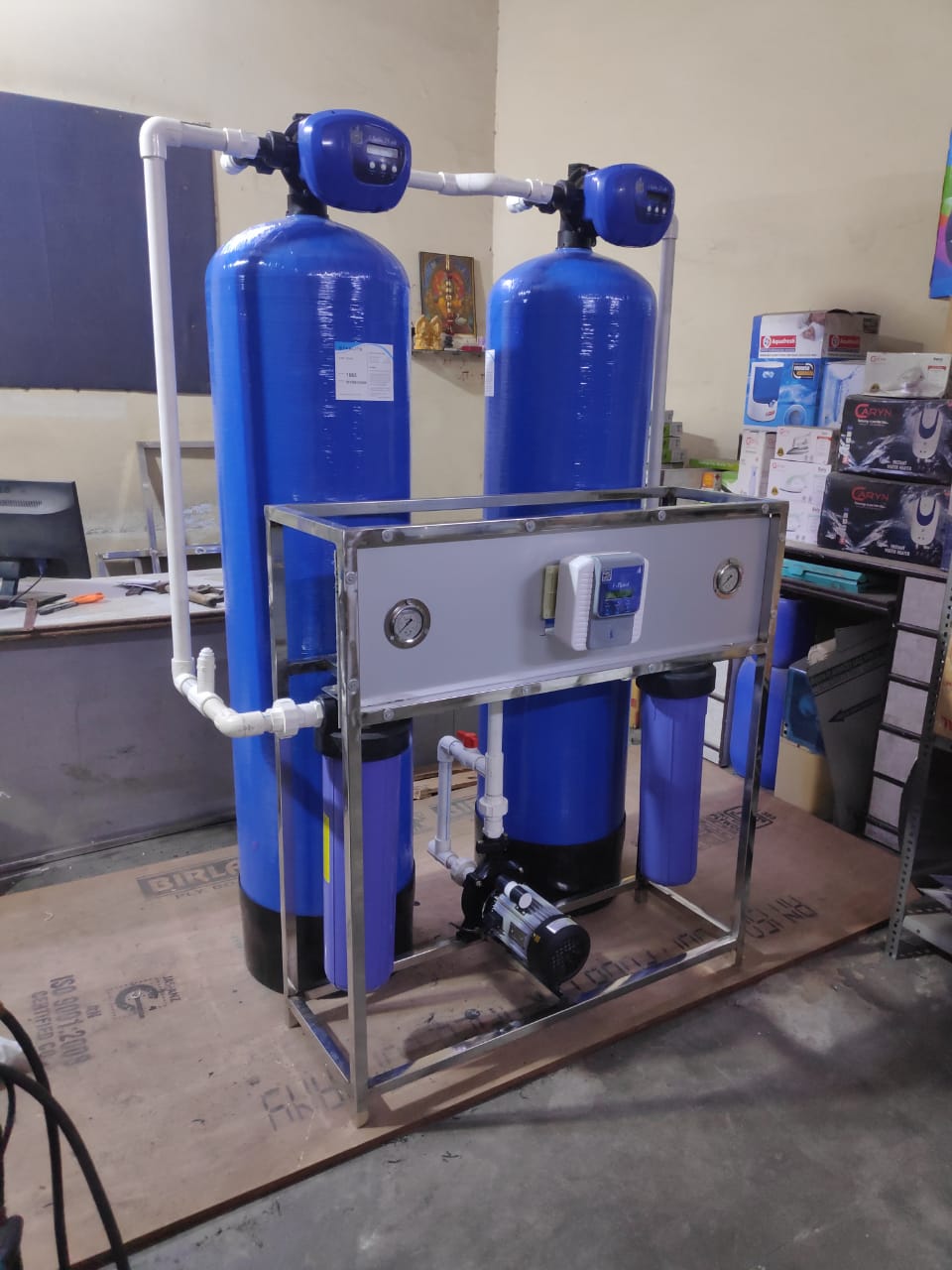
Water purity plays a vital role in industries, laboratories, healthcare, and manufacturing processes. In many applications, normal treated or drinking water is not sufficient because it still contains dissolved salts, minerals, ions, and impurities that can damage equipment or affect product quality.
To achieve high‑purity water, two major technologies are widely used:
- Demineralization Plant (DM Plant)
- Distillation Plant
Although both systems aim to produce purified water, they work on completely different principles and are used for different purposes.
This blog explains in detail:
- What is a Demineralization Plant
- What is a Distillation Plant
- How both systems work
- What each system is used for
- The difference between demineralization and distillation
- Which product is suitable for which application
This detailed guide will help you choose the right water purification solution for industrial or laboratory use.
What is a Demineralization Plant (DM Plant)?
A Demineralization Plant, commonly known as a DM Plant, is a water treatment system designed to remove dissolved minerals, salts, and ions from water. The water produced after this treatment is called Demineralized Water (DM Water).
In raw water, several dissolved minerals are present, such as:
- Calcium
- Magnesium
- Sodium
- Potassium
- Chlorides
- Sulphates
- Nitrates
These minerals increase water conductivity and cause problems like scaling, corrosion, and fouling in industrial equipment. A DM Plant removes these dissolved ions, making the water highly pure and suitable for technical and industrial applications.
How Does a Demineralization Plant Work?
A Demineralization Plant works on the principle of Ion Exchange Technology. In this process, undesirable ions present in water are exchanged with hydrogen (H⁺) and hydroxyl (OH⁻) ions, which later combine to form pure water (H₂O).
Step‑by‑Step Working of a DM Plant
1. Pretreatment Stage
Before entering the DM system, raw water usually passes through pretreatment units such as:
- Pressure Sand Filter (PSF) to remove suspended particles
- Activated Carbon Filter (ACF) to remove chlorine, color, and odor
Pretreatment protects the resin beds and improves system life.
2. Cation Exchange Process
In this stage, water flows through a Cation Exchange Resin Vessel.
- Positive ions like calcium (Ca²⁺), magnesium (Mg²⁺), and sodium (Na⁺) are removed
- These ions are replaced with hydrogen ions (H⁺)
3. Anion Exchange Process
Next, the water enters an Anion Exchange Resin Vessel.
- Negative ions like chloride (Cl⁻), sulphate (SO₄²⁻), and nitrate (NO₃⁻) are removed
- These ions are replaced with hydroxyl ions (OH⁻)
4. Formation of Demineralized Water
Hydrogen ions (H⁺) and hydroxyl ions (OH⁻) combine to form H₂O, resulting in demineralized water with very low conductivity.
5. Mixed Bed Polishing (Optional)
For applications requiring ultra‑high purity water, a Mixed Bed DM Unit is added as the final stage. It removes any remaining traces of ions.
Main Components of a Demineralization Plant
A standard industrial DM Plant includes:
- Raw water pump
- Pressure Sand Filter
- Activated Carbon Filter
- Cation exchange resin vessel
- Anion exchange resin vessel
- Mixed bed unit (optional)
- Chemical dosing system
- Control panel and piping
DM plants are available in various capacities such as 250 LPH, 500 LPH, 1000 LPH, 2000 LPH, and 10000 LPH, depending on application requirements.
Uses and Applications of Demineralization Plants
Demineralized water is widely used in industries where mineral‑free water is essential. Common applications include:
- Boiler feed water in power plants and factories
- Pharmaceutical manufacturing
- Automotive and auto‑component industries
- Battery manufacturing units
- Chemical and process industries
- Textile and dyeing industries
- Electronics and semiconductor industries
- Laboratories and research centers
A 2500 LPH Demineralization Plant is ideal for medium to large industries that require a continuous and reliable supply of DM water.
What is a Distillation Plant?
A Distillation Plant is a water purification system that works on the principle of heating, evaporation, and condensation. In this process, water is boiled to produce steam, which is then condensed back into liquid form. The condensed water is known as Distilled Water.
During boiling, dissolved salts, minerals, bacteria, and heavy impurities remain behind in the boiling chamber, while only pure water vapor is collected.
Distillation is one of the oldest and most reliable methods of producing very pure water, especially for laboratory and medical use.
How Does a Distillation Plant Work?
The working principle of a distillation plant is simple and based on physical separation:
- Raw water is fed into a heating chamber
- Water is heated until it reaches boiling point
- Water converts into steam, leaving impurities behind
- Steam passes through a condenser
- The condenser cools the steam and converts it back into liquid water
- The collected water is distilled water
Impurities and salts are periodically removed from the boiling chamber.
Main Components of a Distillation Plant
- Feed water tank
- Heating element or boiler
- Evaporation chamber
- Condenser
- Distilled water collection tank
- Control panel
Uses and Applications of Distillation Plants
Distillation plants are mainly used where very small quantities of ultra‑pure water are required. Typical applications include:
- Laboratories and research institutions
- Hospitals and medical equipment sterilization
- Chemical testing laboratories
- Small pharmaceutical research units
- Educational institutes
Due to high power consumption and slow production rate, distillation plants are not suitable for large‑scale industrial use.
Difference Between Demineralization Plant and Distillation Plant
| Parameter | Demineralization Plant | Distillation Plant |
|---|---|---|
| Working Principle | Ion exchange | Evaporation and condensation |
| Energy Consumption | Low | Very high |
| Output Capacity | High (up to 2500 LPH and more) | Low |
| Operating Cost | Low | High |
| Speed of Water Production | Fast | Slow |
| Industrial Suitability | Excellent | Limited |
| Maintenance | Resin regeneration | Frequent cleaning and descaling |
| Scalability | Easy | Difficul |
Which System is Better and Where?
Choosing between a DM Plant and a Distillation Plant depends on application, capacity requirement, and operating cost.
Choose a Demineralization Plant if:
- You need large volumes of purified water
- Application is industrial or continuous process based
- You want low operating and power cost
- Required capacity is 250 LPH to 2500 LPH or more
Choose a Distillation Plant if:
- Water requirement is very low
- Application is laboratory or medical use
- Highest level of purity is required in small quantity
- Power consumption is not a major concern
Conclusion
Both Demineralization Plants and Distillation Plants play important roles in producing purified water, but their applications are very different. A distillation plant is best suited for laboratory‑scale or medical use where small quantities of highly pure water are needed.
For industrial applications requiring large volumes of mineral‑free water at low operating cost, a Demineralization Plant is the most efficient and practical solution. Especially for medium and large industries, a 2500 LPH DM Plant provides the perfect balance of capacity, efficiency, and cost‑effectiveness.
Selecting the right system based on usage, capacity, and operating conditions ensures better performance, longer equipment life, and reduced maintenance costs.

